Sunday, 12 May 2013

Pan-Africanism: embracing the vision

For Assata Shakur - for whom the call resounds

“Human beings have an instinctive love of justice on the mass level.”
Kwame Ture

There is something daunting about words that end in “ism.” They make some curious demand on the mind as though they are words of “high intelligence” deliberately constructed to deny understanding to ordinary people. Words like capitalism, imperialism socialism, communism, secularism, neo-colonialism, modernism, post-colonialism, terrorism seem to compel us to study them– to focus energy on understanding their deepest meaning. Said too many times, they can lose significance and become concepts about which only a minority of interested people seem obsessed.

The revolutionary spouting “down with imperialism” to members of their family is soon considered a fanatic– if not lunatic. “Power to the people” has a somewhat accommodating flavour. For it seems clear - if power is called for the people are being denied it by something or someone. Whilst “Imperial-ism” identifies what that something is, as an “ism” word it can estrange the person who does not consider themself a revolutionary from what the struggle is about. Until those ism- heavy words got in the way, they had sympathised with the given cause or movement. The “isms” demand a responsibility to own a deeper understanding of struggle. And experience has shown that most people are not only daunted by, but shun the “weight of responsibility.” Instead, most of us prefer to identify vaguely with a cause and to allow others to dedicate their energies to the politics of struggle.


This “weight of responsibility” applies to Pan-Africanism – an “ism” word that all Africans must contemplate, if we are to transform our lives. Pan- African means “All African” – for “pan” refers to that which encompasses all - across an expanse. There is nothing mystifying about the term. But you either choose to self-identify as Pan-African – thereby making a conscious decision to adopt this political identity, or you live unwittingly as an unconscious Pan-African. Put another way – we might say we’re not “political” but this does not mean that our lives are not always being conditioned by politics. Our disengagement with our condition is what makes us “unconscious.” Our preparedness to take action is what makes us "conscious." Since “imperial-ism” – systematic dominance – is that “something” that denies the people power, by what means can the people reclaim it? Slogans alone – “power to the people” – are not enough. There must be something greater, some system, idea or act of consciousness that can be used for the people’s empowerment. This act of consciousness we might think of as an awakening –becoming conscious- to the meaning of Pan-Africanism. It implies “wilfulness” - a self-initiating act to embrace the vision of Pan-Africanism.

Marcus Mosiah Garvey is hailed as one of Africa’s greatest heroes. He spoke of Africa with unflinching pride and he desired social, cultural and economic freedom for Africans. “Africa for Africans – at home and abroad” and “the whole world is my province until Africa is free” are more than the emotional stirrings of his heart - they express the instinctive aspiration for African self-determination. That Africans should recognise their empowerment lay in deeply understanding the meaning of “home” was his vision. “Home” is foundation, freedom and security; it is where the units of one family gather. No matter how distant and removed from the origin the individual units find themselves, whether by free will or force, they must understand the unifying power of “home” - since one finger cannot form a fist. The importance of cohesion – of unity cannot be overstated. As Amos Wilson asserts: “the family is a primary organisation…or source of power” that secures the cultural and economic survival of its members. By pooling together – unifying the scattered fingers- we determine our own goals and means of achieving them; we protect one another from external forces/pressures. To simply love or honour Marcus Garvey without recognising and embracing his Pan-African vision is “deactivated consciousness” or idealist; that is the power (to have vision) is given over to someone else in which case the individual is absolved of their responsibility to consciously reclaim their power. Instead of “wilfulness,” their “will” to self-initiate and take action is denied (or "deactivated").

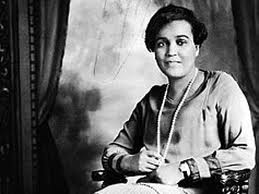
Visionaries are conscious of themselves and their purpose. And they are not afraid – of loneliness, death, being labelled fanatics (extremists or radicals) and importantly their responsibility to the truth. The work they initiate are aligned with the time and the conditions in which they live. For this reason some think Pan-Africanism had relevance in the past; that the “black power” slogan is outdated, the struggle for independence no longer necessary, and liberation movements dead. Equally it is believed that the world no longer produces visionaries. The systematic and wicked slaughtering of African warrior men and women, who dared to envision freedom for their people have blighted the struggle for justice. But as long as there is cause and call for justice the world will produce visionaries. And the call is ever present, for wherever we live as Africans we experience injustice and oppression.

The call resounded for David Oluwale, for Joy Gardner (both murdered by racist police in Uk), the Angola 3, Mumia Abu Jamal (political prisoners of an inhumane US penal system), for Stephen Lawrence, David Emmanuel (“smiley Culture”), for Kingsley Burrell, Mark Duggon, Trayvon Martin, for victims of Apartheid and for men and women workers gunned down in Marikana, for youth in Linden (Guyana) killed by state police. It is resounding for girls and women being raped in Congo, a legacy of a vicious system of exploitation, for the perpetual injustices against the people of Haiti; it is resounding for the trampling all over Africa by Western Europeans, the US and their greedy multi-national corporations who raid, scavenge and construct governments to serve their interest and pay puppets to instigate fake wars to which they can supply arms and when convenient come in to intervene. The call resounds when an African youth is stabbed, imprisoned, stopped, despicably searched and forced into a ready-made sub-culture of criminality; when the academic prospects of our sons and daughters are restricted by a school system designed for their underachievement; when being employed is token - ism (the farce of “positive discrimination”) and where there is a cap on our advancement; when no matter how many degrees we have, how experienced we are in our careers we’ll struggle to find work that pays the same as a less qualified/experienced European; and when our talent and material resources abound we’ll be the last to reap the rewards. All Africans experience, in varying degrees, systematic injustice and exploitation.


If the call resounds for a collective recognition of these injustices, then it calls for a collective (unified) response towards achieving economic, social and cultural liberation. The Pan-African vision is for self-determination, dignity and economic independence for all Africans. Dehumanised by centuries of oppression and exploitation many of us are ashamed of who we are; Pan-African is necessarily a political identity and it demands responsibility. Until we are truly free as a people, we must not be afraid to link arms with brothers and sisters in struggle. We must challenge ourselves to face the meaning of those “ism” words. Undoubtedly this will be a step toward knowing the enemy – as the visionary Pan-Africanist, Kwame Nkrumah, has forewarned us. This enemy - the “collective imperial -ism” of Europe and the US will never give us the freedom to determine our fate; to utilise our human and non-human resources for the benefit of our people. With one hand, European countries let go of (gave “sham” independence to) their “colonies” with the other they clasped a neo-colonial noose around these countries, creating new (“neo”) ways of ensuring their economic interests continue to be served by these countries. The Pan-African objective – is to claim what is rightfully ours –total liberation.

When Nkrumah said: “all peoples of African descent, whether they live in North or South America, the Caribbean, or in any other part of the world are Africans and belong to the African nation,” he not only echoed Garvey he also appealed for unity in the struggle against our common enemy. Self-affirmation as a Pan-African – despite the varied ways this is defined – is an empowering step towards building African unity; it is a step because the whole is a formidable journey. The vision cannot be a theory only - it must consciously manifest. An example of this vision in action was when Sekou Toure invited Nkrumah (after the 1966 coup in Ghana) to be co-president of Guinea Conakry and permitted Amilcar Cabral's PAICG party's head quarters to be based there. Though Muslim and Christian respectively Toure and Nkrumah didn't allow superficial differences to cloud their vision for a unified Africa; such was the brightness of their light. Past visionaries, whose contribution we hail and respect have borne their share of the responsibility. They have illuminated our path toward freedom, if we should only be willing to take time and read the signs. Basking in their light is not enough. We must rise to the challenge of taking action - bend our will and mind to tuning our understanding of the struggle and its "isms." In so doing we too might realise our potential to manifest light.

Shout Out

Sources
The Handbook of Revolutionary Warfare - Kwame Nkrumah
Blueprint for Black Power - Amos Wilson
Selected writings and speeches of Marcus Garvey - Bob Blaisdell
The World and Africa - WEB Du Bois

Friday, 8 March 2013

Pieces of herstory: On Violence against women


blows

A crack

Against the
Softness

of her skin
brought
tears
to her eyes

pieces of a ragged
soul

struggles
to regain something
like…
self

she rises
arching and graceful
against his glare

she knows

his weakness
burdened by being
God’s pride and first born
whose rib wombed Eve

she’s leaving once more
when she leaves
this
time it’s for good
and her good

striding towards
a shadowed valley

somewhere way
beyond his reach


Raining Outside

I washed the wares
Put the children to bed
and waited for dreams
to lighten my head

He climbed beside
Upside inside me
folded himself within
I took and sighed sighs
of years of being glad to be
With him

It will rain tomorrow
So the spirits in my dream head
Said
Showers, oceans seas your misery
will return this time again
in your bed

Wares too much
to wash
so I left them
piled in the sink
funk
welled within
I became tired of my children
it started
raining outside
again


I watched the rain
and did nothing
waiting for the thing
to come sit beside me
upside and inside me

He came home that night
Wrenk with the spoiling
love he had been making
bounding me to frigidity

The spirits retreated
Leaving me to find my own
mystical ways to
beat back the rain.


Flip Side Woman Aching

Not all this ache
is
love sweet
one time a kiss
was promise
to a fool woman

but now
is eyes
crying
heart pain ache
suffering
eye water

waiting
for stars
to turn in
your favour


He sees you
Crying
Crying
Crying
Knows is him
Make it so
He laughs
Is laugh he laughs
Though

Your aching
comforts
him
Beating
Beating
against
Your woman
Wondering will


Spirit longing
for some
Homey love
His arms reaches
Somewhere, inside
Where there is still
Love living
Flip siding
your feelings

you see daisies
Rose petals red
Against the white
Sheet spread on
the bed

He
Eases
The
Aching
Remaking it
Again
You
Taking him
Again
Willing
Him again
Riding
Aching
Within
Inside
Him
Tak-
ing
You
Break-
ing
You
You
You
Come round
To his way of
Loving
Aching and
Remaking
Flip siding
You.

Days without
Hearing seeing
Him
Your mind start
Reaching for signs
That were there all
Along
When you were
Playing his gaming
With your feelings again

Woman
Don’t you know
Roses don’t stay
Too long blooming.


Above From Pieces of herstory
poems by m yaa asantewa

Thursday, 31 January 2013

‘The Cancer of Betrayal,’ Coup in Guinea Bissau and Remembering Amilcar Cabral

For my father now in his protracted sleep

I sometimes try to make connections between seemingly disparate things. I’ve been thinking about what is significant to me about January and ended up with a list of birthdays that might have relevance to one another. My father’s – 14th; father in law’s 9th, both best friends’ father’s 8th and 7th, sister’s 4th and today my sister in law’s. There was nothing remarkable about this. So I pressed for something else and recalled that Ahmed Sékou Touré who was President of Guinea between 1958 and 1984 was also born on January 9th. But it was January 20th that made me pause – the date Amilcar Cabral (Abel Djassi)was killed in Guinea (Conakry) where his Revolutionary Party the African Party for the Independence of Guinea Bissau and Cape Verde (PAIGC) had their headquarters. This was 1973. Later that year Guinea Bissau was declared independent following decisive armed struggle against the Portuguese. Until the coup on 12 April 2012 the PAIGC had legitimately held power since then. Guinea Bissau – with a relatively small landmass compared to many African countries - represents something massive – a revolutionary state that came to power following armed struggle against the military might of a European (Portuguese) colonial power. For this Cabral is internationally respected as one of Africa’s great revolutionaries.


January now became about Cabral, and his legacy. After the Coup questions have been asked about what happened in Guinea Bissau, how has it been possible for the revolution there to be betrayed? Or put another way “what is the underlying cause for the situation in Guinea?” Briefly, days before the run-off elections (supposed to take place on 29 April 2012) an armed group of soldiers brandishing AK47s captured a number of PAIGC party members, including its President and leading candidate Carlos Gomes Junior; violently beating them and ultimately impeding the democratic process. It was a contemptible act because it was not conducted in the interests of the people – as is the way of revolutions - but converges with other reactionary and terrorist tactics to destabilise African countries. Coups and proxy wars are tactics used repeatedly by imperialism preceding their planned ‘interventions’ – let’s just call it ‘invasions’ as we’re now plainly witnessing in Mali.

In attempting to answer the question about what happened to the revolution in Guinea Bissau, it has been remarked that the situation there is no different from elsewhere in Africa. Something is rotting its progress. We must be clear what that “something” is. And when we speak about Africa and revolution we must accept that there is no simple answer to questions about what went wrong. This brings me to the disease of “cancer” for which there has been surmountable research but only few kinds have found cure. In my tenuous effort to make some links between those birthdays above I found myself thinking about my father – who they said died of prostate cancer. I was about eight and it was the first time I had heard both words. Though I didn’t know what they meant I knew this was the reason my father was dead. Cancer invades the body, debilitates its host, sapping vital energy until so weakened it dies. Cancer is a virile enemy, loyal unto itself, extending its life by feeding on the body. So how can the body defend itself against it?

Some point to healthy living, eating the right kinds of food, even having the right mental frame of mind since a healthy psychological disposition should transmit through the body, radiating the cells with positive energy. A nice thought – but it’s surely not that simple. Often we plaster one area of the body only to find another needing equal attention. Cancer betrays the entire body – though it may only attack one part – at any one time. True it’s vital to have all the cells of the body in the best working order – they must feel part of one solid unit – one body, one concentrated mass. Any part that’s contaminated, or attempts to heal itself in isolation will impact the whole.


Thus we find in Guinea Bissau and other “mini-states” the kind of isolation that makes probable what Cabral referred to as the “cancer of betrayal.” This was from his speech “Homage to Kwame Nkrumah” delivered in May 1971: "let no one come and tell us that Nkrumah died from cancer of the throat or any other sickness…Nkrumah was killed by the cancer of betrayal, which we must tear out by the roots in Africa, if we really want to liquidate imperialist domination definitively on this continent" (in Unity and Struggle, 117).

It’s startling then that Cabral was shot nearly two years later by a member of his own party, Innocencio Kani. The association with the Portuguese secret police (PIDE, like the USA’s Central Intelligence Agency) as an instrument of the colonial enemy is indisputable. For me it doesn’t matter that the intention, as the evidence tells us, was not for Kani to kill Cabral but rather to destabilise progress so far made by the PAIGC and ultimately seize power. That power would have been controlled – as is the case now – by reactionaries, virile cancerous elements. Portugal would have been spared the shame of defeat having neutralised (apparently the real intention) the PAIGC leadership. What matters is how it was possible for him to do it.

There is, therefore, a troubling question about his assassination: how was Cabral as the leader of a revolution in this vulnerable position? This despite the forewarning in his “Homage to Nkrumah” when he called for “reinforced vigilance” against infiltration – and not merely from imperialist forces: for he uses an African proverb to remind us that “rice only cooks inside the pot.” Revolutions are never free of forces determined to interrupt their progress. Just as a coin has two faces, Cabral tells us “all of life’s realities have two aspects: positive and negative.” A progressive revolutionary party is positive; uses the “positive action” (a term/strategy he credits to Nkrumah) to realise its objectives. Any such action – like Africans working together to eradicate imperialism “opposes and is opposed by negative action and vice versa” (Unity and Struggle, 116). Further, the progress of revolutions are impacted by “class struggle, social structure, the role of the party and other institutions including the armed forces.” Cabral relates this to the betrayal of Ghana in its efforts under Nkrumah to establish a “newly independent state.” This is pertinent for our reading of the situation in Guinea Bissau albeit so many years following the revolution. To this must be added the development of a contingent of Cadres/leaders who aren't simply taking up but actively and creatively weaving the revolutionary mantle in the event that either of them should fall.


Thus I return to the question of Cabral’s vulnerability – which is shared by all revolutionaries. When I read the account of his killing, I accept that since he was not armed when Kani confronted him, he had no choice but to reason with him – to try to “change his mind” – to re-mind his compatriot that he is a valued grain in that pot of boiling rice. Or put another way – the revolution, in truth Africa – needed him. In our space of distance and hindsight we might think the attempt was futile, but persuasion was Cabral's strength, it was how he had gained on the ground support of ordinary people. I wonder though whether Cabral relaxed, forgot the vigour of his earlier warning about “vigilance” and was thus taken by surprise when he was so close to gaining independence for his beloved people. Was he truly mindful of how readily cancers spread? One of its worst species - the kind one might call “aggressive” stood before him pointing a gun against which he had no defence. This species has something to do with what Cabral saw as the “choice of men in the revolution.”

It is only possible to betray something we have a strong feeling for or belief in. If one loves Africa, believes in unity and solidarity, has an unwavering commitment to the struggle for total liberation what would it take to betray it? Coups are the cancer of imperialism, an aggressive force that has never removed itself from any part of Africa; only entrenched its historical heels, ready to kick at and desecrate peoples and their places. It has instigated every type of economic, social and political destabilisation in order to sustain itself, signing their own concocted self-serving agreements with their trained props. It has rooted itself in every cell of the body we might here call Africa. Imperialism has spawned itself in the form of ECOWAS, African Union, Africom, MOSSAD, NATO, CIA and MI6 – (take some of your own time to look up the abbreviations) - all of them part of one noxious system feeding the peoples in every corner of the world with lies about “interventions.” This calls to my mind the medical intervention that advanced my father’s death. His cancer had been there, couched in his body, causing him severe pain and discomfort but it would not kill him – the doctors in Guyana warned– unless he attempted to have an operation to remove it. Having travelled to America some years later, he ventured to have the operation that cost him his life. It was not, after all, the land of opportunity.


We‘re not duped. Obama’s second term, like his first is marked by deeper aggression of US forces into Africa. It was Hollywood stuff – the mania that saw Africans (black people – if you prefer) jumping up in frenzied celebration of his inauguration on January 21st. He is a mega symbol of distraction – a Jesus come swiftly.On this same day the Guardian reported that Afganistan, Pakistan and the Middle East would no longer be the sole focus on terrorism. Cameron instead is pushing for the focus to be in North Africa. Of course he is. This he says, in a kind of Kipling parlance, is a response to “generational struggle” against “al-Qaida-inspired militants in North Africa.” A few days later the Wall Street Journal (29 January) reported that the US had signed an agreement to establish a military base in Niger, strategically placing itself in a position to launch drones in Algeria to counter terrorist threats to its "national security". Cancers spread. Where next will it attack, what country's leader execute and parade before the world as a macabre spectacle of its anti-humanism? African leaders – unless progressive and for the people are wolves in sheep’s clothing, foolishly “spitting at the sky.” My seemingly random links in January means that I didn't overlook the brutal execution of Patrice Lumumba on 17 January 1961 by the Belgians. For this cancer eliminated many of our revolutionaries, Pan-Africanists and freedom fighters wherever they found themselves in struggle for Africa's liberation and unity. Though tempted to lament, we must hold back the tears because they are not as decisive as bullets and unity in struggle; girded too by culturally specific ideology.


In remembering Cabral something we who regard Africa as primary must also remember is that “so long as imperialism is in existence, an independent African State must be a liberation movement in power or it will not be independent.” We must try like Cabral succeeded in doing to combine theory with practice (Nkrumah’s “thought and action”) toward the building of a unified Africa. One liberated and independent state in Africa is vulnerable to the invading parasitic cancer of betrayal. Coups have their captains like revolutions have their leaders. A single (and iconised)leader adored by the people but unprotected at any time is no adequate strategy of defence and for the enormous task/enemy that continues to face Africans everywhere. Despite the tendency to feel that he was an overwhelming leader Cabral saw himself as a “simple African man, doing [his] duty in [his] own country in the context of [his]time.” Is our time not the last, desperate stage of imperialism when we must carefully watch which way and how fiercely the wind is blowing and yet dare to face forward ever.


Shout Out

Some books of interest:
'Homage to Nkrumah' in Unity and Struggle, Amilcar Cabral
Neo Colonialism The last Stage of Imperialism, Kwame Nkrumah
Strategy and Tactics of the Revolution, Ahmed Sekou Toure
How Europe Underdeveloped Africa, Walter Rodney
The Political and Social Thought of Kwame Nkrumah, Ama Biney

Monday, 7 January 2013

A Quiet place


Where a single translucent
lotus
drifting along
a glassy lake
doesn’t seem
lonely

where time is contemplation
not the dash of numbers
speed marching round
wall and wrist

where meditating
and morning
have the same rhythm
and meaning

where bathing is ritual
honouring rivers, seas
and Oschun


Where every room
is sanctuary
furniture free
TVs and screens
not necessary
and the only stair ascended is
from Geb to Ausar

where love is no kind of pain
nor the impetuous gushing of words
but Divine communion
and atonement for nurturing soul

where every birdsong
is the lullaby of a private revolution
in stillness


where breathing is not simply
mechanic, nor convulsed
but the delicate crafting of aliveness

where peace is not an overindulged aspiration
impelled by concocted tyranny
where no one designs hysteria
to veil my will and imagination

A quiet place
where embrace is the shared
heartbeat of a thousand
elevated souls

A quiet place
where I can simply be
and delight in being alone
in the serenity of silence.

By M. Yaa. Asantewa
(January 2013)


Monday, 31 December 2012

Graceful departure: when it’s time to cross the bridge


For Betty, safe crossing...

A Guyanese proverb reads “never cuss alligator till you done cross bridge.” It warns against condemning something until you’re certain it is no longer useful, or that it no longer has need of you. Year end is perfect for self-reflection and contemplating new ventures and opportunities. Sometimes reflections are suddenly forced on us because we failed to read the signs sooner. Perhaps we read them but were reluctant to take new steps; to turn off the current road where the tarmac had long needed resurfacing. I share the following consideration about the current state of academia as part of my year end reflections.

Pursuing my degrees was meant to expand the relatively poor education I received at school and provide better employment opportunities. I didn’t plan it but multiple degrees usually imply a natural career in teaching at university. However, I’ve been feeling disillusioned with academia for some time. As I wander through the corridors of London Met, I can’t help feeling unhinged and thus tempted to “cuss the alligator.” The Caribbean Studies no longer exists – neither do History, Philosophy and Performing Arts. How can this be? In a university with the largest number of black and minority ethnic students across the UK, the Caribbean Studies Department made sense. On the History pathway, students had the chance to study Black British History – but only a privilege (probably white) will now have the chance to study any form of History at University level. The “bridge” has curved over my path, I must now earnestly face the question – do I still have need of alligator?


As a teacher, even if your position is marginal, you convince yourself that you’re at least “giving back,” and hoping to inspire generations who like you come from non-traditional backgrounds and are the first and maybe the last members of their families to go to university. Such students need extra support, sensitive teaching and consistent guidance. You pride yourself in the ability (earned from experience) to deliver lessons that would not merely benefit basic educational needs but also encourage students to consider how they might contribute to their society when they leave. Some wont make it – not because they are incapable but they need serious, consistent support and they will invariably take longer to “self-actualise.” You hope too that you’re part of an environment committed to producing “critical thinkers” who will challenge the destructive or outmoded practices and then find creative ways of transforming their society.


These well meaning efforts now seem sentimentalised. Stripped of the funding necessary to run courses in Humanities, Arts and Social Sciences, institutions like London Met are forced to churn out training courses. Quality of the student experience and “higher learning” are compromised. Vocational training is necessary and for some, as it was for me, it can be the pathway to Higher Education. However an educational system exposed to market forces, as the government has now condemned it to be will only produce “drones” and breed the corruption evident in any business (or “for-profit”) environment. How will students respond? As Andrew Mcghettigan and others argue “students will be misled to put a price tag on everything they read and write. The intellectual freedom and critical autonomy of the individual, which democratic nations have sought to develop for centuries will be irreparably damaged.” (See paper 'Putting Vision Back into Higher Education: A Response to the Government White Paper'). I would add to this that students will also put a “price tag” on their teachers; they will expect more spoon-feeding, whilst doing and thinking less. But this is not the future, this is current reality.

It must be time to “cuss the alligator.” The government has been clear about its position on education - a legacy of previous conservative governments -: privatisation of Higher Education. An elite will receive the best educational experience and will largely not feel inclined to give back anything. The majority will scramble for scraps and pay extortionately for the “privilege,” as privilege it will be. In the market place of education the government doesn’t care about “weak institutions” like London Met. Indeed its policies are intentionally designed to weaken them further.

London Met’s reputation, perhaps since the merger in 2002 (which saw the start of redundancies and departmental trimmings), has been under agonising pressure. Its weakness lay in its diverse student body – though this was once its strength and the herald of “widening participation.” In August this year, the government’s vicious move to reduce immigration targeted this particular university because of its “weakness.” The signs are not veiled.


The Tower building is the stamp of the Holloway Road Campus. The “Tower” is also the 16th card in the Tarot divination system. The image on the card is of a building cataclysmically torn down, with fire spiralling from the top and two figures plunging to earth. Whether they have chosen to jump or were evicted by the intensity of the flames is not clear. Horrifically, in August just before the UKBA’s decision to remove London Met’s “Highly Trusted Status” a member of staff plunged to his death from the Tower Building. Like many who remain despite the gloominess and “flames” he had been at the University for 20 years. Why he did it is not clear but one might regard this as symbolic of imminent demise for the University. Interpretation of the symbols when the 16th Tarot card is drawn would naturally be personal. However, if we’re all in the burning Tower do we perform a collective weeping in the hope our tears will amass enough water to out the flames?


Crossroads are inevitable in every life. They force us to make choices. Spiritual aspirants are not daunted by this, but accept that these choices help to align us with our Divine purpose. We can’t always see over the bridge, which would give us certainty of what new experiences lay there. But our lives are more than a hamster wheel existence. And if we must take a lonely leap from the Tower at least this is an act of self-determination where it might yet be possible to find new alligators.

Shout Out
December 2012

Thursday, 1 November 2012

Affirming Thanks


To the Creative Life Force
Which directs my Divine Path, I give thanks:

Thanks for my light and life
My health and my peace of mind
Thanks for love, beauty and abundance.

I give thanks for guidance, wisdom and understanding
This trinity of spiritual elevation

I give thanks for present and absent family
My beautiful friends with whom I have shared this journey
Who have been patient with me, who have loved me and been true to me.
I give thanks for new friends who bless me with renewed wisdoms and understanding.


I give thanks for the many challenges that enable me to be more disciplined and purposeful in my life.

Thank you for the heart that courageously embraces every experience good and bad. I give thanks for the ability to turn misery to laughter and dismantle the mountain of negativity.

I am blessed by my interaction with the forces of nature. Through this I struggle to read the signs that direct me along the path of liberation. I am in tune with the rhythm of the seasons.
The moon does not make me mad. She is my great mother and I honor her. The sun guides me. Through him I am successful. I overcome my negative impulses and shine.


I give thanks for my open-heartedness and willingness to receive new ideas. I am not afraid to open the door of my subconscious where hidden truths abide.

In my dreams I run and win races.
I climb stairs and do not tire. I will one day master flight.
In my dreams I pick and eat the sweetest fruits. Some fall at my feet from overbearing trees.
I eat freshly baked bread. I waltz through great halls, attending sumptuous banquets where a seat is secured for me. My place there has been earned.

I am not watcher but maker and participant too. I share my wisdoms with anyone who searches like me.
I accept that there is a Divine Plan, moulded by Divine Law.
I AM not afraid that I AM part of it. I do not fear who I AM.
I recognise that here the Power is. And it is mine – now and always.

Through my Will I express this Power.
I champion the Wisdom of Tehuti, without which I have no meaning.
I am completely blessed and suffused with perfect Understanding. Through this I am guided.


My steps are ever certain and climbing towards liberation
From doubt, fear, ill-feelings and indiscipline.

Justice is my visible shield for I do not sacrifice the collective good will for individual grandeur and fortune.
Beauty is engraved on my heart. For beauty has a soul that extends its force to my life.

I uphold her Truth and know that I am Victorious. The expression of beauty is my desire for temperance, equality and freedom for all. All receive and freely give. All are rich; all share in the great, unlimited supply.

I chant to the eternal light. This prevailing splendour that channels me and restores my confidence, borning me new from the shadows that aim at my Soul.

I give thanks for the grace and love of Oshun, my muse. My heart is glad it found you. Het-Heru resides there too, driving me to that destiny with Ausar.


My ancestors keep me rooted to my purpose. In every experience they reveal themselves to me; their brooms sweep my path. They are the pillars of assurances and I never forget their perfecting rhythm. I drink wine and eat wholesome food in honour of them.For my body is the chamber of spirit and I respect it.
I nurture it with good thinking and being. I adorn it with the spirit of humility, compassion, joy and love. I nourish it with beauty and grace. I charge it with courage and confidence to champion the rise of Heru and the Power of Ausar.
Without wisdom for which my spirit ever yearns my divinity is vanity alone.


My path has long been designed. I ask only to remember, to give thanks and be guided by the exacting melody of Wisdom.

Shout Out

Top image - credited to D'bi Young (from her facebook)