Thursday, 17 August 2017

Guyana trip July 2017 I: Diaspora Engagement Conference


Reluctant Participant

The theme ‘Dreaming Diaspora: Doing Diaspora’ sounded fluffy. This wasn't the reason I didn’t initially want to go to the conference. I knew I couldn’t afford it! From the outset, I understood that it would have to be self-funded, given that I’m not attached to an academic institution, but am independent, based in the UK, where average travel fare to Guyana would cost £700. But in July! Double that. I decided I wouldn’t go. It kept pushing me to attend, however, and finally, I agreed I’d find the funds and go. My decision to finally go was due in part to a sense that there would be few if any presentations on culture. I was right. Even so, what could I really contribute? When the current administration took office, ‘business’ for developing the economy was its focus; our High Commissioner here in the UK was formerly in business. I saw a future in which the arts and culture were forced off centre as the poor cousin of advancing the nation’s economy. My paper/presentation would highlight that culture is the bedrock of societies and should not be sidelined since it is issued from the peoples that make up our communities and societies. What culture needs in order to contribute effectively to economies is for the government to institutionalise processes for creative industries to develop and thrive. As they do in the UK and elsewhere, ‘inward investment’ is necessary, along with securing music (where we at with copyrights?) and consistent education programmes.

Active Participant

The conference opened on Sunday 23rd July with a reception. Some anxieties about feeling out of place among the suits and business people dominated. One of the first people I met, who settled some of my misgivings was my cousin, Michael Brotherson. He works in the Foreign Office, headed by Karl Greenidge, the Minister of Foreign Affairs whose absence did not go unnoticed. I was surprised but had no choice but to rise to it, when Vice Chancellor Professor Ivelaw Griffith asked me along with others to say a few words about the conference. I waited my turn, all the while styling anxieties about what I’d say. I was the last to speak. Thankfully the speaker before me, Paul Tennassee (University of the District of Columbia) had closed his remarks by introducing a young poet called Keon Heywood, who performed a wonderful piece about Guyana. The springboard was easy; he’d allowed me to highlight the importance of culture and arts in all our engagement about how to develop Guyana, to remember that culture too is business and key to our humanity. Professor Griffith did an intriguing thing giving me that momentary platform, totally unprepared as I was. After I spoke, he was able to confirm that as well as the newly developed Business/Enterprise Unit at the university there were plans too for developing the Arts. I knew of this in any case from previous conversations with the Vice Chancellor. I would embrace the conference with confidence now and appreciate that I had a place there.


The Papers and Presentations

It was impossible to attend most as I’d hoped but that’s the nature of conferences. I read a sour note on FaceBook that some of the presenters sounded as though they’d swallowed a dictionary. It was perhaps difficult for this observer to appreciate the quality of the papers and that it was a conference initiated by the University where one would expect the calibre of contributions I saw. What was lacking was sufficient time for us to digest and question the presenters and also better rooms to better facilitate the PowerPoint slides. We ran way over time the first day of the conference, which was due in part to the opening formalities that included a Keynote address by President David Granger. The fact that the University had sought to include the government as well as opposition leaders marked its intention to have far reaching inclusion and obviously to highlight the important role each need to play to engage the diaspora effectively if we are serious about development.

There were excellent, if hurried papers from the Theme: ‘Engaging the Diaspora’ – which included methods relating to policy development to utilise the potential of the diaspora; entrepreneurship and investment possibilities that move beyond remittances and establishing a methodology for researching the diaspora; Building Partnerships with the Diaspora Theme saw papers on creating a ‘multi-dimensional Process for engaging the Diaspora’ and exploring the reality of the resources (skills based and financial) of the diaspora. A paper I enjoyed was on the government Green State initiative, pushing for us to explore and implement renewable energy as an industry, delivered by Gary Best. It’s a commendable initiative but my misgivings about the oil exploration and development make it difficult to be convinced about how the two will mesh. I caught only an enticing tail end of ‘Mimicry and Fantasy in the Diaspora: the view from Richmond Hill in New York’ by Dr Dhanpaul Narine but others said it was a treat.

My presentation was titled 'Embedding Guyanese Culture' and showcased a few organisations/initiatives based in the UK, Bogle L’Ouverture Publications, Huntley Conference, Guyana UK Sports and Development Association, Way Wive Wordz and 'Guyana Speaks!' It emphasised the need to institutionalise/embed culture for it to effectively matter in development strategies. It was well received, though time didn't allow for any questions following.


It was several times noted that the Diaspora contributed around $US450 Million in remittances, with the majority of Guyanese located in the USA. Although the US based Guyanese dominated, I was actually really impressed by the enthusiasm, initiatives (educational as well as business related investments) and experience they amass. For example, Dr Vincent Adams, one of the appointed Education Ambassadors has 30 odd years’ experience in oil and gas. He will be lending his skills in a mentoring role from the University.

There were, at times tiring rounds and key notes by government Ministers and representatives. Gerry Goveia, buoyant but for me exuding a businessy arrogance that grated, was there to speak on behalf of the Private Sector. He said some things about the business community going and demanding x and y from the government, forcefully it seemed. Gail Texeira represented the opposition and seemed to be citing statistics about increased migration, as though this was consequential to the new administration and not a process inherent to Guyana’s progress (or lack thereof) throughout its nationhood. I didn’t hear connections being made here either with the zealous dishing out of 10 year Visas by the US Embassy.
The Foreign Office was tasked with serious questions from the floor following a presentation by Michael Brotherson, who was there in place of Karl Greenidge. The Diaspora Development Policy document or strategic document was the issue. It seemed this had been ‘in process’ for far too long, wide consultation with the diaspora missing; the possibility that Mr Brotherson, responsible for its advancement hadn’t clapped eyes on it. I felt it for him; those US delegates were not letting up. And rightly so.

I wish I could say something about the Minister for Education’s presentation. Either by this point in the day I was tired or it was flat and unimpressionable. Words were said, lots of graphs and seemingly well-organised charts and things but I can’t speak to the substance of Minister Nicollette Henry’s discussion, which was unfortunate. On the other hand Cathy Hughes, now Minister for Technology (the title might not be totally accurate) was vibrant, acknowledging some of what our young people are developing, discovering and needing investment for. Animation seems to be big. There is a Guyana Animation Network, which collaborates with Trinidad and Suriname. Ms Hughes noted that Animation could be done more cost effectively in Guyana than some of our neighbouring countries. I can’t verify this but think the opportunity worthwhile to bear in mind.

Ambassadors from Mexico, China and India attended the conference and presented on their respective country’s success at engaging its respective diaspora. Again the policy issue crept up because countries like Jamaica and Haiti all have one – Jamaica particularly, we were told say the ‘diaspora is an extension of itself?’ All this to beg the seriousness of the Guyana government in making use of its diaspora. David Lammy, our MP for Tottenham flew in to give a keynote. He did so with the use of charm and some comedy but seriously noting that if the Guyana government was serious about development with its diaspora’s contribution it should consider why children born to Guyanese parents outside of the country aren’t automatically Guyanese too, as they would elsewhere be regarded citizens through heritage.

In fact, a bug bear of one of the delegates was our use of the term ‘diaspora.’ He was suggesting we switched to the term ‘Persons Of Guyanese Origin’ (POG) which might be less confusing to Guyanese generally and broadens identities linked to Guyana. ‘Come backee’ was also questioned as to its appropriateness, despite being culturally in circulation a while.


On the question of oil.

I don’t remember when exactly the oil discussion took place – though one of the papers was on this – but someone asked about the contract. They wanted to know where we could find it. I confess I’m not in favour of the oil industry development. There have been too many instances in my life time where this has proven to be a nightmare and destructive force to small countries forced to give unfavourable terms to multi-national corporations that have more wealth than those resource rich countries they exploit. What undeniably happens, as I recently read in the case of the small African nation of Equatorial Guinea (though what kind of ‘small’ we mean is another discussion) is that sickening, corrupt contracts are made with the so-called leaders whom the corporations give whatever revenues are yielded to directly whilst the mass of the population starves, the country continues in underdevelopment. Why should Guyana be different? In the Equatorial Guinea example, this disgusting deal was made with Exxon Mobil who directly paid money into the President’s bank account. Why does our government have faith that Exxon Mobil would grow moral fibres just for Guyana? Okay, so it wasn’t this administration with whom the contract was made. We were told at the conference that the contract was made with Janet Jagon in 1999, during her brief term as President. When administration changed in May 2015, British lawyers advised the government that owing to our border dispute with Venezuela it should be cautious about what goes out to the public. This is shocking – that Guyanese actually don’t know what’s in the contract. Further, former President Bharrat Jagdeo in 1997 added a non-disclosure clause in the petroleum Act. And something I didn’t catch properly about the ‘licensee being the one to give permission for disclosure.’ Someone who was there can authenticate the correct note. None of it should sit well with us. Put simply, we can’t see this contract. In the first place if this was made with the highest person in the land who has absolute power, then we can only move our mouths like we’re circulating saliva but can’t do anything to change the course of action weighing on this impending industry, positively or not. An industry that some at the conference, I couldn’t help noticing seemed entirely assured would bring great wealth to the nation. It seemed too that this industry would be so economically transforming for Guyana that we might as well get rid of bauxite, sugar and rice. There is a despairing sense that this winding down of same has already begun. I can’t see when disclosure would come since the border issue with Venezuela has been long. It’s being put before the international community at the end of this year, in any case.

We were further told about the 50/50% division of profits from oil revenues with the stomach churning caveat that this would be after the cost of investment had been accounted for. In other words, it would really be (if I understood the thing properly) 75/25% initially. How long this would last I didn’t hear. I hope at heart many of us were concerned about Guyana's sovereignty and its development otherwise the blades of grass Venuezla claims will pale beside the probable ravages multinationals like Exxon Mobil are capable of imposing on 'small' countries.


Where were the Young People?

Any major gripe I have with the conference is that there wasn’t a contingent of young people present. I didn’t see any from the University doing a presentation or from the wider community. I communicated with a young man, who was a Civil Engineer teacher at UG who had brought a few of his students to the conference. I would have liked to see a panel discussion, chaired by and comprised of young people. This issue was raised on the last day and hopefully the feedback was noted along with others for organising future conferences. Importantly, there was a suggestion to develop a diaspora conference for young people. Perhaps the cost was prohibitive, if students were encouraged to attend, at $US50.


However, the Conference did offer an opportunity to engage with the community, including young people. This was the day to ‘give back,’ where delegates could take on a volunteering activity within the community. I went to a Youth Volunteering Day, held at Umana Yana. It was great to see young people engaged in development efforts aimed at supporting educational and social needs of other young people. There were groups pitching their ideas for development to a panel of judges. The winner was one that had developed an app called Maths Guru. I met some Youth Ambassadors. They were sponsored by the US Embassy to go to the United States for three weeks, take part in youth projects which they would return to Guyana and repackage in some form to offer to Guyanese youth. Most of the ambassadors were selected from Queens College. One, Visharnie, a previous QC student, bright and focused worked for the Guyana Chronicle and invited me to do an interview for the paper. This interview focused on culture, its lack, its potential in Guyana. She surprised me (pleasantly) and reinforced why I thought we needed the presence of our young people at the conference, by cutting to the chase and asking about the impact of cultural imperialism on the way we do or do not embed/institutionalise initiatives to promote, advance and centralise Guyanese cultural identity.


Cultural diversity?

At some point the fact that the majority of attendees were African Guyanese was made. It is a disgusting, shameful reality that events initiated to encourage wide participation when lead by an African Guyanese often results in a lack of involvement by Indian Guyanese. This has been my experience for years. I can’t speak to the ravages of the 1960s when the mud and blood were slinging both ways but in my lifetime I’ve observed efforts by African lead organisations to be inclusive of all the ethnicities. One of these is the Guyana UK Sports and Development Association, which organises a folk festival every year (for the last 20). This is for all Guyanese to take part in. But Indian Guyanese stay away. This has been the case no matter which administration is running the country or the ethnicity in the UK’s case of the High Commissioner. Of course, I can’t speak to events organised by Indian Guyanese or other groups where Africans are actively sought to attend? How would one know in a divisive society as ours? I know that I’d sooner see African Guyanese participating in the variety of festivals, donning clothes to reflect than I would the other way around. But that story is tired. A refresher to this came at an Emancipation event (I’ll blog separately on this) where Prime Minister Nagamootoo wore a dashiki, so too all his body guards.

An article by a Guyanese of Indian heritage suggesting that those Indian Guyanese who attended the conference were there for cronyish benefit was stupid for too many obvious reasons. The writer was there – looking, she suggests for her mattie and when seeing few, thought she was in the wrong place. Her comments remind me of a forefinger straining forward, an action which forces the thumb to invert backwards. The lack of representation by Indian Guyanese has nothing to do with the University since it’s an institution for all Guyanese, neighbours and international community. Invitations were far reaching for this reason.

If that writer’s comments can be described as stupid, John Mair’s comments (in an article he wrote about the conference) were insensitive and equally foolish. Firstly, he bemoaned being a ‘token white’ – if that’s how he chose to self-identify that’s his shame. In truth, did he expect organisers to rally minority numbers of ‘white’ (European/English/Spanish/Portuguese) Guyanese to satisfy some quota? As for renaming the ‘diaspora’ – ‘dire-spora’ – this suggests he really is ‘token’ that he is not one of us – however way we want to identify our connectedness with Guyana. When he referred to the President’s attendance with his ‘gang’ I was reminded of his paper (he presented same time as I) on the so-called ‘Guyanese Mafia’ a term he wants to have on record as his. Baroness Amos beamed one morning of the conference from a pre-recorded video and said Prince Charles had coined the term. I can’t stand it. Worse than this, however, and snakey too was his comment that the conference was a ‘coronation for the Vice Chancellor.’ The Vice Chancellor was hands on, but he didn’t ‘chair’ everything as Mair reported. This was a disgusting exaggeration. The Vice Chancellor tried to attend as many of the panels as possible, moving from room to room as we, the delegates were. Mair got personal about the VCs bowties too, though I couldn’t work out whether it was an endearment or slight. He might reflect (?) on his own curious eccentricity of writing as a pseudonym as well as in his own name in the same article; in other words referring to himself in the third person. He might chew on the hating notes in his paper, which probably have more to do with punctured privilege and realisation that when he's in Guyana, he is a minority than anything else.

The cultural finale on the last night was disappointing. There was an attempt to be inclusive here too – something East Indian, Chinese, Indigenous and well – Dave Martins! We only live in some fickle hope that ‘inclusion’ might mean we don’t separate like this but revere and creatively demonstrate our coming together, attempting to ‘one people’ in a way I've observed Surimamese handle the diversity issue. Keith Waithe, the University’s Artiste in Residence had promised us something special, that we’d get the chance to dance and do weself. He would give us, one supposed a bit of something we might connect with African Guyanese. That didn’t happen. Unfortunately, the group of musicians he’d organised (comprising Rukiza Okera, Larry Bartley, Chris, Buxton Fusion and Helen McDonald) didn’t pull it off or even together and appeared to be rehearsing. I think it was unnecessarily elaborate, in any case. What would have worked in my humblish view is an array of drums. This would have sounded a timely note for emancipation, which was three days after the conference ended. The might of the drums would also have been appropriate to follow Dave Martins house tearing down act which had overrun and preceded Keith Waithe et al. And yet here too there were some comments about a lack of diversity on this night. And on and on the racist bile prevails.


The Investiture – of the Vice Chancellor Ivelaw Griffith
(photo from Guyana Chronicle; see their article on the 'installing' here)

I thought I could have ducked this programming of the conference. I didn’t know how ‘formal’ the thing was, didn’t know what an 'investiture' was. I went and it really was pomp, as I now realise these things are. Felt woefully underdressed in my newly purchased UG and DEC tee - merchandise I was glad to support. The President, Prime Minister, other Ministers, UG Chancellor, UG faculty members and Deputy Vice Chancellors (I was surprised that there were more than one); guests from different parts of the world and their respective universities all there to see the installation of the 10th Vice Chancellor to the University of Guyana. I can (outside and inside the event itself) see and hear the cries about it because it is change. What I can’t witness more directly are the sneers by those who think the diaspora (Professor Griffith representing) are taking over. I’d have to be resident proper to appreciate that aspect and the quarters whence it cometh. For whatever reason and however it was made possible, who can really envy the Vice Chancellor the role he accepted? Anyone who merely dreams, I suppose.


Building bridges

Finally, I had to acknowledge it was worth being present at the conference because it gave the occasion to get to know other Guyanese living outside. Whatever the reasons they attended the conference I got a sense that there was a serious commitment to helping Guyana to develop. We have between us earned extensive skills in all fields that can contribute to this process. And many have been trying for years to find ways to ‘give back.’ We could all lament the seemingly deliberate closed doors and bureaucratic instruments that have stopped our collective/individual efforts – be they to return and teach, set up sports clubs, contribute hospital supplies, rebuilding schools, supplying schools with computers/books, facilitating literacy initiatives, wide ranging business enterprises (using local produce/services), helping to alleviate mental health and other medical issues, domestic violence, particularly against women and so on. It was noted that many of us (I am one) who left Guyana didn’t do so by choice. The sense that when we come back we’re seen as ‘stepping on toes’ is something we learn to live with. At least I have. The conference organisers didn’t consciously enable those present to make connections with each other, by say making it part of a programme/morning or afternoon; that had to be organic. It would have been good to have a sense of who was in the room, but with our last minuteness (mine included) that might be a stretched expectation. The chance to get to know Guyana was programmed, I’ll write on this in another post. But this would have served as an opportunity to connect.


We can measure the success of the conference in so many ways. I choose simply to refer to its inception. It had to be dreamed up, in the first place. Then believed possible. Who would dream only and not attempt the practical steps to realise their vision? So although the theme appeared philosophically fluffy to my ear and mouthing and laughter at times I fully appreciate what has been achieved by this initiative, which began with a dream or vision. One of the outcomes was the launch of the Centre for Caribbean Diaspora Engagement. Another was the signing of a Memorandum of Understanding between the University of Guyana and University of the West Indies. The Investiture, too, set a new standard, like it or not. The conference brought together people who would otherwise never be seen together because of our respective interests. And we don’t have to like each other, nor share the same ideology. We need as a start to recognise that the University has attempted in this initiative to be a mobilising force, and its new Vice Chancellor seems serious about the business of running it with the necessary contribution of key players, just as elsewhere Universities are developed, maintained and become important instruments through which the moral, philosophical, political, social, economic and cultural values of a nation are progressed. Many of the delegates are the University of Guyana Alumni, perhaps attesting to their interest and genuine desires to give back. Success then is what we make of it – and my gratitude to the Vice Chancellor and team for organising this first Diaspora Conference is fully expressed here.


Saturday, 17 June 2017

Grenfell Fire. Disgusting. Sickening. Criminal


It is a serious indictment of our society that amidst the disaster, grief and anger of the Grenfell Fire that the authorities continue to collude in lying to all of us. Who are the ‘authorities’? and why would they conspire to treat the public like we’re all too stupid to read between their lies? Mainstream media is an ‘authority.’ They are wealthy corporations with power to determine the extent of the propaganda they feed us to keep us trusting and believing in their assumed power over us. News channels, long discredited as objective, conspire to keep the population in a state of intellectual confusion, and literally unaware. The BBC is a state mouth piece that sanitizes anything that could implicate an elitist supporting government as the self-interested, profits over people party they are. Newspapers thwart public awareness with sensational headlines that colour our perspective, railroading our consciousness to try to convince us they are feeding us facts.

This collusion by the ‘authorities’ backfired on 8th June, with the massive support for Jeremy Corbyn at the Polls on Election day. To pepper us with insult, the Conservatives decided to make some kind of sickening power-sharing deal with the Democratic Unionist Party (DUP). The intricacies of this decision will baffle most ordinary people. Not because we’re stupid, but because there’s a way the ‘authorities’ seem to make wanton decisions that stretch the limits of our basic political understanding. How can there be any suggestion that there could be any kind of ‘deal’ with the DUP? The mainstream papers report it with casualness, as though this is perfectly fine, but the DUP are one half of a peace agreement, negotiated by the British Government, who are supposed to be objective arbitrators of that process – the Good Friday Agreement. Again, how is there any suggestion that they could be making use of the seats gained by the DUP in the UK Parliament during the general election, to prop up conservative policies? Even the previous Tory Prime Minister, John Major, who was part of negotiating the Good Friday Agreement has warned Teresa May against it, based on the potential resurgence of violence in Northern Island. This is an affront to our electorate sensibilities. Thankfully, Gerry Adams’ party, Sinn Fein put it on the table that this decision by the Conservatives is outrageous and is challenging it.

The hung parliament outcome barely humbled the pug faced Teresa May. She was forced to fit her in party enemies around her Cabinet table so she could cling to power, with some fiendish warped smile for the cameras. It brought to mind the hashtag #whitehousesowhite when I saw them in the 1922 Committee room. It was disgusting to see May ducking and diving the people she was bidding to govern but prancing before cameras and reporters like these mattered more. They did – because they are the ‘authorities’ that buttress her flimsy position; why waste words on the people? Her power-mad arrogance is untenable for a leader of a so-called ‘democracy.’ Does she believe ordinary people, whether made more aware due to social media or an inevitable movement toward progressiveness, cannot see her pathetically staged and stiff interviews that speak to her lack of empathy and disregard for us?


So as I write, the ‘authorities’ are trying to tell us that 30 people are believed to be the victims of the Grenfell fire disaster. 30 people, though the numbers are believed to rise considerably – is the narrative they’re pushing when logic tells us differently. 78 people were said to have escaped, up to 30 said by the media to have died, which leaves over and above 400 people unaccounted for. If people were asked to ‘stay put’ in the event of fire, how can the ‘authorities’ really expect anyone to believe so few have died? How, when there were 120 flats – about 500-600 people are we expected to compute so few casualties? And what might that increased number be, when they have agreed their story? Why can’t we have a more realistic estimate – given all the experts called upon to assess the likely cause and outcomes of this horrendous tragedy? Why will it take several weeks for us to actually know how many people perished in this disaster?

But a question that made me conscious of a cover up: Teresa May, strong and stable in her ivory tower, rushed to call for a public inquiry – why this and not an inquest or criminal inquiry? There's actually a little confusion about which of these would likely best serve the residents. If a public inquiry would allow residents full participation, not be dragged out and also allow scope for independence, fair enough - but the people need to be clear which process or processes would be most effective. When not in her safe tower, unlike the ashed Grenfell mass grave, we see Teresa May posing like some mascot between the fire ‘authorities.’ She had no time to show compassion to the residents and families who have lost everything – who have lost their loved ones. By comparison empathy was easy for Jeremy Corbyn, who comforted the bereaved and grieving, reassuring them he would speak for them, he would find the truth. And, unlike the whimsical May we have no reason to think he’ll do any U-turn on what he says.

When the Guardian newspaper, refreshingly deciding to run with the social movement and support Jeremy Corby calls Grenfell May’s Hurricane Katrina, it’s true. But it was not from the Guardian I first heard this being said. My 85 year old mother said the same thing hours before I saw the article in the Guardian. She said more – that the lives lost in this horror were sacrificed. This came after she broke down in tears, with me joining her, trying to comfort her as she shook her head – questioning –‘why?’ ‘Why’ and ‘was it worth it?’ By this she meant for innocent, mostly and relatively poor people (considering the varying dynamics of how poverty is measured) to lose their lives in this way. How could such overwhelming and consistent cries by the Residents of Grenfell Tower about its safety be ignored? The Royal Borough of Kensington and Chelsea Council (RBKC), another ‘authority’ disrespected the residents for no other reason than because they were deemed undesirables, most of them minority ethnics. Poor people have no power to persuade and use privilege to get what they want. They have no money, since we learn that they were denied legal aid (as part of incessant Tory Cuts), to properly challenge the council’s recklessness. As for the Kensington and Chelsea Tenant Management Organisation (TMO) they too are culpable of negligence. How well were they ‘managing’ the tenants and their grievances? Why didn’t they listen to them? The proactiveness of the tenants – forming an action group is commendable but their calls for action that would ensure the safety of residents were ignored. The TMO has to do more than offer ‘sincere condolences’ for a tragedy that they know could have been avoided.


But the Guardian too is still underplaying the numbers who died, and it’s not merely because, as Lilly Allen put it, the government is trying to ‘micromanage people’s grief,’ it is because they’re covering up the truth. The authorities have to come up with one story; one they think we the foolish public will accept. I’ve watched the various News Channels reporting on the fire, all are terrified of being responsible for telling us believable numbers. As soon as one of the locals try to go beyond a seemingly sanitized response to questions, they try to shut them down. One of those was Jon Snow’s interview with Lilly Allen who was doing her best to express a sense of what’s really going on. Another reporter apologised because a young man was swearing as she interviewed him, again trying to shut down what he was saying – that he didn’t believe that the fire was an accident. But is he wrong? Is he just hyping? If there were repeated calls to secure this building that were ignored, the Grenfell fire, claiming untold lives cannot be considered an accident. David Lammy, who sadly lost a friend in the fire, sounded the right note of Corporate Manslaughter. It would in fact be Corporate Mass Manslaughter, hence the need for a criminal investigation.

Another authority – a corporate Rydon Construction made profits off of a contract that ended in the deaths of hundreds of people. Called in to pretty up the building so that the rich residents would not be offended by what was considered an eye sore, what corners did they cut in order to improve the aesthetics of the tower? The cladding was one factor believed to impact the spread of the fire. But it is also being reported that there was a central heating installation in the building, which means that if fire stops and fire collars were not replaced this would also increase the rapidity with which a fire could spread. Again were corners cut or mismanaged in this process?


72 hours too late Teresa May turned up to ‘meet’ with residents, obviously shamed by Corbyn’s empathy and was rightfully booed by the people as the police – another ‘authority’ - shielded her drive through car. What could she say to them that she couldn’t before? That she was sorry her Tory government cut numbers of firefighters to threadbare; that MPs in that borough ignored the repeated calls by residents about the vulnerability of the building; that she regretted that many members in her party were against amendments to regulations, supported by Jeremy Corbyn, to make Tower Blocks like Grenfell safer; that wide scale gentrification is not pursued in the interest of poor people but the wealthy and powerful, favouring profits over people. I agree with all the calls for this woman to resign. She is an utter disgrace.

She thinks the government’s pledge of £5 million to help get families back on their feet can in any way compensate people for the horror that is now their lives? This is an insult. Again, this figure seemed plucked from air because how many families is this supposed to accommodate? They don’t know. Maybe the figure is accurate because I’ve yet to see numbers of survivors. Her subtle words that the government is committed to ensuring the dispossessed residents are rehoused in the borough, guaranteeing children will continue in their schools were said in the same sentence in which she says that ‘some residents might ‘wish’ to be relocated nearer to other relatives outside the area. What doubletalk is this? In an age of designed austerity, where tax payers bailout bankers who still retain big bonuses – and where the poor are also taxed to pay out shares in dividends, her £5 million pledge – supposedly to accommodate costs of equipment, food and clothing is beyond a joke. Money is not the issue – people also need resources. This out-of-the-air pledge is another of many PR exercises by the Prime Minister, another example of how out of touch she is with the people and our needs.

The experts are right of course that any time you hear the words ‘public inquiry’ it conjures ‘a long drawn out process that whitewashes any serious attempt to investigate real causes and bring to justice those responsible – one case that seems to have been left under the radar is the Chilcot Inquiry. Defence Lawyer Aamer Anwar condemned the push for a government led inquiry, meaning the parameters would be set by Teresa May, the outcome too. At least he was given air time on RT (Russia Television) News, not the Mainstream. And he said he wouldn’t trust Teresa May with any inquiry; that would clearly give her control of determining an outcome suitable for her land grabbing, property developing friends in high places. A Criminal Inquiry is what we need to allow an independent process to investigate this catastrophe. If a jury can serve as part of a public inquiry and if residents and families are able of have their voices heard as part of this process, so be it. Any thing that denies them this would be add further injury.


After grief, when hope of there being any more survivors was lost came anger. I only hope that the protestors will organise and strengthen their/our collective power to challenge this monster machine of power and authority. Organising means strategizing:
• Demand the best investigative process (Inquest, Judicial Inquiry, Public Inquiry) so that residents’ voices can be heard in the process of investigation. Whether inquest, Public or Judicial Public Inquiry culpability, prosecution where necessary and adequate compensation need to be assured as part of the outcome. Ensure as part of the investigation that Rydon Construction reveals how they made the decision about what panels were used in the refurbishment of Grenfell Tower and what were the exact costs and cost saving with regard to the panels? In other words, full disclosure of their feasibility study.
• Insist on legal representation, particularly to enable residents to continue challenging any proposals for regeneration by which they will be disenfranchised.
• Demand a complete list of residents, accessible from the Council’s electoral register, so we can know the official number of who was usually in the building. We can likely assume a percentage above that number due to human movement.
• Get a confirmed list together from the hospitals; figures of how many died, are still in critical condition and were discharged.
• Get the fire services to provide figures of how many people they evacuated, and accurate figures of how many bodies were recovered.
• Get written agreement by the Council/government that residents would be adequately rehoused within the Borough/area; that children will indeed continue attending schools in the area.
• Insist on provision for assistance with grief and trauma for short and long term.
• Demand a Memorial to those lives lost. As part of this consideration it must be remembered that the many lives lost in the fire were contributing and adding value to the lives of others. They were part of a community, participating in human development, a process that has ceased as a consequence of their tragic and unnecessary deaths.
• Demand that this site is bequeathed to the residents as a memorial to the victims instead of awarded to property developers who wish to profit from the disaster.
• As part of the process of investigation, there must be transparency about the materials used – were they supported by the British Board of Agrément (BBA) – a body that tests materials to ensure that they are manufactured and installed within certain codes of practice, British Standards and Building Regulations? Demand answers to these questions.
• Who were the manufacturers? As this is not publically known. Were the panels tested in accordance with British Standards? Did they have a BBA certificate? Were they accepted by Building Control? What were the other issues involved in the refurbishment work carried on that could have exaggerated the unhindered spread of the fire?


This ultimately is a tragic human story. It has touched all our lives – as the Guyanese Poet Martin Carter writes, made us ‘all involved.’ To shake up the warped mainstream narrative, we must acknowledge that among the heroes running into the fire, were a number of Muslim men of all nationalities. The human response by people from all ages, classes, backgrounds, religions and so on coming together in solidarity has been powerful. It is an expression of a real social movement in action and also reflective of appeal and support of Jeremy Corbyn. Now comes the time to reinforce our resolve to challenge those in power, those with authority to do better by all of us, to recognise and respect our human value. If no other lesson is learnt by this, it should be that in unity and with one voice we, the people have agency to stand firm against any authority.

SHOUT OUT

Monday, 17 April 2017

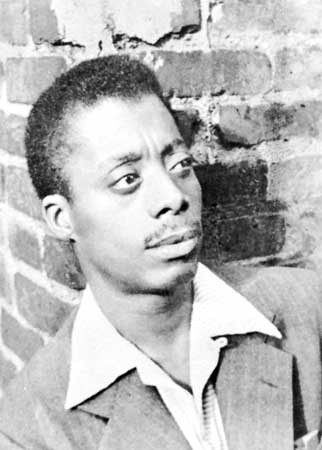
The Spirit of James Baldwin


‘The unexamined life is not worth living: and I know that self-delusion in no matter what small or lofty cause is a price no writer can afford. His subject is himself and the world and it requires every ounce of stamina he can summon to look on himself and the world as they are.’
James Baldwin – Nobody Knows My Name.

James Arthur Baldwin whose literary and prophetic brilliance has been catalysed most recently by the release of Raoul Peck’s I am not your Negro, is a man not so much seen or heard, but felt. This feeling, I see as the presence of a potent energy of spirit. The more I feel him, the more reminded I am of Esu, one of the Orisa of the Yoruba spiritual system of Ifa. This Shout is an attempt to share my thoughts about why I feel him in this way and why his presence (spirit/energy) has chosen now to re-emerge.

Who is Esu?

Descriptions, depictions and concepts about Esu are so abundant as to be overwhelming in a simple search to know who this important Orisa is. It’s accepted, however, that he is a messenger – of Oludumare (the Yoruba supreme being/creative life giving force, usually referred to as ‘God’). To whom does he bear messages? to Oludumare and us - human beings, standing therefore as a bridge between us and the creative force (God). It is accepted too that before making offerings to other Orisa we do so to Esu first, since he (and ‘he’ is often gendered this way) is that bridge. Varied perceptions about him proliferate because there is a slipperiness inherent in his essential qualities. He is both jovial – appearing fun-loving and full of wrath. His wrath has been conceived as ‘evil’ by European (white/Western) observers. They have associated his complex force with tricksterism, and ultimately he has been likened to the ‘devil.’

The dynamic and humanistic Ifa system holds no such ideas about ‘evil’ versus ‘good’ and ‘devil’ versus ‘God.’ There are simply routes, paths, progressive and digressive journeyings towards the advanced self – we might understand readily as fulfilment of our ‘destiny.’ When individuals begin to arise in consciousness they intuitively seek a better exploration of their destiny, and use all forces and phenomena available and ever present in the universe, seen and unseen, toward that end.

Thus the energy of Esu opens the way (think of it as preparation for spiritual awakenings, expanded consciousness); he is giving (bearing our messages to Oludumare). But he also forestalls, berates, and exacts punishments, manifesting in physical losses of material possession and psychic numbness whereby one feels stuck or unable to make sense of what is taking place in our lives/world. I’ll call this element a retreat of consciousness which might render an individual lessons in the truth of their actions and decisions that are wanton digressions from their destiny. This retreat can be as dramatic as yielding remembered trauma and depression in order to enable the individual to realign with their path. Or it can take the form of epiphany enabling the individual to more joyfully regard the unwitting challenges thrust upon them by Esu’s perfecting methods. Esu’s energy is therefore much more empowering than the simplistic binary of ‘good’ and ‘evil’ since it represents the complexities inherent in the sum of all human experiences.

Where the Esu force meets Baldwin

Baldwin saw himself as a ‘witness,’ which we can easily link to Esu’s messenger profile. His role as witness means that he could not isolate himself into any one narrative or construction of being human. Our obsession with single narratives, which is altogether limiting with the incumbent desire to categorise and box in ourselves make us squander a quality I think vital in understanding a presence (being) like Baldwin in our world. I call this quality our spiritual intelligence. It operates when one is able to look at someone and see beyond their physical appearance. When we’re able to acknowledge the spirit of an individual, we’re sharpening our spiritual intelligence whilst simultaneously aligning with the life giving force through which we are ourselves creative; we are advanced in consciousness, aiming towards our divinity.

It should not therefore surprise us when Baldwin’s biographer, David Leeming, writes that: ‘It was the calling to bear witness to the truth that dominated Baldwin’s being, and in this role he could be harsh, uncompromising and even brutally cruel,’ (1994:xii).

The truth, if told passionately is sometimes uncompromising and brutal depending on the receptivity of the heart or conscience to which it is directed. Baldwin’s target was the American nation whose guilty conscience would naturally consider him ‘cruel.’ I know Leeming was also referring to personal examples (of Baldwin’s ‘brutal cruelty’), but my aim is to posit a wider feeling of Baldwin. The central question posed to the American people, which Raoul Peck so masterfully determines at the end of the documentary I am not your Negro, is to ask why they (white Americans) needed to invent the ‘nigger?’ This question ought to be forever etched on the psyche of Europeans who sought to conquer the souls of Africans since the economic wanderlust imperative had to be accommodated by a much more pernicious and lasting subtext of their conquest. The question is not asked because Africans (in America and other parts of the diaspora) want to ring-fence ourselves in the perpetuity of victimhood or trauma but precisely to re-imagine our strategies to oppose the newest forms of oppression/domination we currently face.

The sexuality fixation

But instead of trying to deal with this question there is an obsession with Baldwin the man – and particularly his sexuality. At the screening of the film at Phoenix cinema a couple weeks ago where I joined Tony Warner to do the Q&A, this was the first question from a member (a European American/white professor) in the audience: ‘why was there an absence of his sexuality in the film?’ Some years ago the first time Tony invited me to do a Q&A on Baldwin at the British Film Institute (BFI), the first question equally was centred around Baldwin’s sexuality, which was not the focus of either documentary.

Often the fixation about his sexuality makes no mention of an adolescent ‘violation’ (at about age 14) when he was fondled by an elder man, which both aroused and terrified the young Baldwin. But his ‘witnessing’ is total; he was aware, of course, that adolescence presupposes evocative and evolutionary experiences that individuals choose to take with them through their life journeys or leave behind. Sometimes those experiences haunt us like shadows dancing at every turn of our lives; sometimes they liberate us from limited perspectives about what it means to be human. I would agree with David Leeming that Baldwin was ‘ambivalent’ about his sexuality (1994:xiii). For me this can be linked to his self-styling role as ‘witness’ but this 'ambivalent’ aspect also aligns with his spirit as Esu.

Cursory readings about Esu reveal things like his love of sex, alcohol, fun, cigarettes and cigars, dancing etc (see for example Neimark 1993:72). He is not attempting to please, appease nor deliberately disparage by being this or that thing. He is a balancer of forces, if you will; redeeming polar extremes when necessary to set us back on track. Thus Baldwin’s force is to be a harbinger of rectification using any means possible – just as Esu would, even if those means are painful or pranks that force us to sit up, listen and make aright our transgressions.


The prophet and the hypocritics

It’s certain, as Douglas Field considers, that Baldwin’s ‘reputation has suffered from his refusal to adhere to a single ideology and his continued resistance to and suspicion of labels and categories,’ (2009:4). His critics, African and European (‘black’/’white’) wanted him to choose a position – identify himself as homosexual or heterosexual, be an essayist or novelist, live in USA or Europe, be a spokesperson for civil rights or a celebrity of white America’s illusions about ‘the negro,’ be a negro/black writer or a writer and so on. Writers, if we take this label alone, when committed to the truth of their art, would naturally shun such limiting fixtures. But no ‘prophet,’ as David Leeming has called him, would claim to be this or that thing given that the pendulum of human transgressions is ever in flux. Spirit is thrifty- adapting to myriad movements at the same time. Spirit is timeless also and mutable – in short, ‘slippery.’ According to Leeming:

Baldwin was a prophet not so much in the tradition of foreseeing events – although The Fire Next Time bears witness to the fact that he sometimes did precisely that – as in the tradition of the Old Testament…he understood (like prophets in the bible – Ezekiel, Isaiah, Jeremiah…) that as a witness he must stand alone in anger against a nation that seemed intent on not ‘keeping the faith,’ (1994:xiii).

The nature of this faith is simple: that every human being deserves the right to exist without fear of deliberate and systematic attempts to deny them every possible chance of survival. ‘I am not a nigger’ his spirit boldly declares on the screen, ‘I am a man.’ And that persistent struggle to be occupied his literary explorations throughout his lifetime, and is especially signalled in titles like Nobody knows My Name, No Name in the Street and ‘Stranger in the Village’ (Field, 2009:9). He feared death, as most of us do. But death brought about through nature’s course is one thing. When it is callously and continuously brought about by a strain of human deficiency and degeneracy hallmarked by white supremacists the pummelling of writer activists like Baldwin must be given the kind of attention Peck’s documentary has resurrected. The documentary emphasises a causal relationship between persistent racism and white supremacy, through its collaging of footages from the 1960s’ Civil Rights Movement and the present Black Lives matter Movement. But Baldwin’s spirit does not speak passionately only to white supremacists but to those liberals who are so charmed by their complacency of privilege they are unable to see how their silence on matters of unprecedented racist killings by Europeans against Africans makes them complicit in the degenerate actions of their forefathers and contemporary brothers.

I was informed by a friend (a writer, therefore naturally a 'conversation thief') that during the screening when we did the Q&A at Phoenix cinema that she had to endure running commentary by a couple of white women behind her chiming things like ‘it’s so biased, not all white people are like that.’ During the Q&A, in response to a question I said that there were a number of Africans disproportionately incarcerated or have mental health issues. One of the white (European) women seated behind my friend muttered to her friend ‘I think you’ll find they’re asylum seekers.’ I wondered why they were there if they weren’t prepared to allow the brainstem to properly perform its function of relaying information that would enable them to ‘keep the faith.’ However, a privileged psyche would find it impossible to excoriate its conscience and this embeds a fundamental contradiction of liberalism.

His critics wanted some barometer against which to measure Baldwin. For a time they compared him with other ‘negro writers’ like Ralph Ellison and Richard Wright, whose works have been given more canonical coverage than Baldwin’s within the academies (especially in the USA). But there has been a shift and realisation that it wasn’t Baldwin’s refusal to be pigeon holed that caused critics to overlook his literary worth, it was their misty shades that made him appear fuzzy, ungraspable and at times unpredictable.


Baldwin as Baba

The father symbol revolves in a lot of Baldwin’s work. His first book Go Tell it on the Mountain, about a boy preacher who challenges his authoritarian preacher father is obviously autobiographical. He didn’t know his biological father; knew only Reverend David Baldwin, the man his mother Emma Berdis Jones married when James was about three and with whom he had many battles. He contemplated these battles with his father (as he saw him and not so much as a stepfather), throughout his lifetime, one of these is powerfully rendered in the essay ‘notes of a native son.’ He had imagined he hated his father but later recognised that his father’s weaknesses, parading as authority and power, lay in the pervading psychology of racism that made it impossible for him to love himself and therefore to fully transmit that love to his children. His father’s psychic debilitation (he would die in a mental institution of tuberculosis) was rooted in the brutal experiences of trying to survive in a world white people declared was theirs. His father was frigid around white people, for they symbolised power over him. Baldwin resented observing how his father acted around white people. He hooked himself onto their model civilising order – Christianity – but could not transcend his circumstances on earth through its doctrines. For this doctrine taught him that salvation could come only through death, in the milk and honey land of heaven concocted for Africans to accept their earthly servitude while Europeans enjoyed the double experience of gorging on the nectar both on earth and heaven.

Esu is a ‘father’ symbol (baba). Baldwin didn’t have children of his own, but carried the essence and desire of a father as part of the witness/messenger persona. This was not least because he was the eldest of nine children whom he assisted his mother in raising, but in his role as witness he considered himself somewhat fatherly because of his single-minded mission to ‘save others through the word,’ (Leeming, 1994:4).

Finally, in a mindboggling moment when ‘keeping the faith’ of advancing humanity is up close and contentious in our lives, the spirit of Baldwin is timely. We might add to the question Peck’s documentary poses - why do American imperialists (not the populace) need to invent wars? To push us from our comfort zones, we might also ask how is it possible for a country, self-declared as the world’s avenging angel can arbitrarily bomb other nations without any provocation; an act thought to be a model of USA presidential standard (Obama’s version was Libya, let’s be clear) which legitimises, especially in Trump’s case, this presidency? The father conscience (Baba Esu) would err towards human progressiveness not backwardness, degeneracy and destruction. It would berate and chastise us into seeing sense, that our collective destiny is to advance our humanity not compete with one other, especially with ever increasing methods of destruction.

This need and resurrection of Baldwin comes now to remind us, as we mull over warnings about nuclear war with supposedly civilized world powers (USA, UK, Russia, China, North Korea and Iran) of the ‘moral bankruptcy’ of the nation that chimes the tune of war most vociferously, the USA. It was this nation that he loved and by which he demanded to be acknowledged as a man. So if Baldwin can be likened to the ever chastising Baba Esu, we must accept that intermingled with his ‘brutal cruelty’,’ and uncompromising truth and honesty was his stance that revival or return to the ‘faith’ lay in humanity’s ability to take seriously the power of love forever swinging on the pendulum of human transgressions. The intuitive feeling I have for Baldwin as Baba Esu penetrated that much deeper when I learnt that a Yoruba death drum opened the celebration at his funeral, attended by 5000 people who might not have known his name but now at last could feel the rhythm and power of his words.

A new The Amazing James Baldwin 6 weeks Course, led by Tony Warner, Michelle Asantewa and Donna Mckoy starts February 25th 2019. Book to attend now.

Works cited:
Douglas Field, ed. A Historical Guide to James Baldwin: Oxford University Press, New York: 2009

David Leeming. James Baldwin – A biography: Michael Joseph Ltd: Penguin Group, London: 1994

Philip John Neimark. The Way of the Orisa: Empowering Your Life Through The Ancient African Religion of Ifa: HarperSanFrancisco, New York:1993

Randall Kenan. ‘James Baldwin, 1924 – 1987 – a brief biography’ in A Historical Guide to James Baldwin. Douglas Field, ed. Oxford University Press, New York: 2009