Continued from last post...
http://goodmorningdays.blogspot.co.uk/
Enoch Powell had (before I was born) consigned me to a destiny of creating terror and violence; prophesising my vile, bloody impact on the imperceptible tranquillity that was English society. But I didn’t know that I was this vile, this evil creature he had thrust into the minds (imagination doesn’t work!) of his followers (the bold ones and the others). I was too busy dealing with the emotional trauma of being in and adjusting to this new hostile environment, one that questioned the very point of my existence. I was unaware that I was considered the cause of its hostility towards me. A bizarre notion – that I should be the instigator of my own oppression. Those born into this hostility might have a different sensibility about belonging, feeling part of England. I know only that I had no perception of racism until I came here. I learnt how to read its signs. And they were everywhere. I learnt that I was a ‘problem.’ I suspected myself – that my attitude needed checking – all the time – it was me, always me who was the problem. What else could I do but try to prove how much of a problem I was. Someone decided that’s what I was and will always be. And I wanted evidence.
Now, our mothers and fathers were used to repair post war Britain; they stooped to do the menial jobs the poorest English person refused to do. By the time I arrived here those poor English people had cottoned on; they checked their exercise of pride; decided to muck in; after all those Caribbeans were buying houses, travelling back home– how? The exercise of pride switched; we – the now over 30s and 40s were not prepared to stoop anymore. Why should we? We wanted in – wanted a bigger piece of the English pie (we knew there was no gold). Some compromises had to be made to sample it – compromises some of our brothers were not prepared to make; some of them loafed their way to jail, others played the entrepreneur, the loot of which is yet elusive, the big boys always seem to have the trumps. Compromising meant that you just couldn’t quite be – couldn’t fully express yourself without seeming like ‘the problem’. It was hard to get over your vexation (that insidious knowing that you weren’t wanted, that you would never belong whether you were born here or not); so you carried the thing with you like a genie that every so often popped the hell out. You knew you weren’t going to be promoted, no matter how hard you worked – and you – some of you – worked hard, so you never went for the promotion; a hapless white colleague went for it instead. What was the point? You were trying to control the ‘genie’ – the ‘attitude’ – if only to keep your job. So you bore a smile; played the (‘I’m not black really or not really black’) game.
The 1980s was the era of the ‘buppy’ – those black people who managed to get a foot in what Thatcher wanted us all to have, upward mobility; a juicy, if tenuous stake in capitalism. Some of us stuck with the dole, though, because it was easier than having to play that other game – the pie could only be shared to so many before it ran out. Bags of weed were purchased with the dole – it just wasn’t enough to do anything else with; to put down for a deposit on a house say! Besides, some of us thought it was money owed to us; some sorry compensation that we deserved for being treated as if we were the scourge of humanity. Others studied everything we could, receiving certificate after certificate, diplomas for this and that and still no advancement in our jobs – we still didn’t have the guts to go for that promotion when it came. And while we were busy studying our white peers worked (you know - those you went to school with that weren’t as bright as you or perhaps just a little brighter); they got that job you went for with your ill-fitting face and attitude, knowing you were a ‘problem.’ That’s the ‘good old days’. What has any of this got to do with our children? Our ‘good old days’ have left some scars. The reality is that we were experiencing our own disillusionment in our ‘good old days’.
Powell spawned the gargoyle Griffin who perpetuates the puke that I and my children are an ‘alien threat’. The indoctrinating language of terrorism is used with subtle variations to define us and our children. So now that the goldless streets are repaired; the menial jobs taken care of, not only by the poor English who are now willing to muck in but also by their hard working European brothers and sisters - what need has this society for us and our children? The sense of feeling, of knowing that you are surplus, (a category you share with white working class children whose parents didn’t indulge the pride check), that before you were born it was prophesised that you were going to be ‘a problem’ can compel you to presenting the evidence.
My mum tells me she loves often now. If I’m honest I think I needed to hear it more when I was in my moment of experiencing – when I was being told at every turn that I was a problem. But I understand that she too was in her moment of experiencing and struggling to find her footing; you just had to assume the love was there. When you suspect yourself of being a problem, you turn in – too young to do the introspection – but you implode. You agree that the enemy is you. Everyone says so. And you want them to know how right they are; it’s true. You do what you can to present them with the evidence. You become bigger and badder than the prophecy.
We want our children to live, to survive their moment of experiencing despite its bleakness. So we might ask ourselves some hard questions. Have we transferred our own disillusionment and sense of being, feeling unwanted to our children? That feeling can make us aggressive, unloving and frightened – a terrifying emotional cocktail that we might not even be aware of exhibiting. Questions abound. Do we listen to our children? Do we know how to respect them? Do know that should respect them – that their respect of us might have to be earned? Or are we as ‘old school as our parents’ - exercising the harshest disciplines that’s insidiously remnant of the slave whip? Do we always think we’re right, our children wrong? Have we forgotten the negotiations we had to make in our time to survive the hostilities we faced? Are we honest and open with our children (you will know the boundaries)? Do we tell them how brilliant they are? How much we love them? That love thing cannot be overstated. The fullest expression of it to our children can only manifest if we fully express it to ourselves – when we have properly accepted who we are – a place we reach through introspection. Fact is we might know more about how not to express love than anything else. We might know the hardcore version – sisters might express the supermatriachal one; brothers might still be wondering what the hell it means to express love (who showed/taught you how to do this?).
Do we take our children out (when was the last time, to see a movie – the pirate DVD’s not the same thing - to the park, to a shopping centre, to other family members – to the library)? Are we interested in them and their interests? Do we know who their friends are? Have we invited those friends round (or is your house out of bounds to your child’s friends)? Do we know where they are (they might pretend they’re some place their not, but do you know where that place is – at least)? If they find themselves incarcerated, do we throw hands up and leave them there? If we can see, somehow intuit something’s wrong – do we let it go because we’re too wrapped up with our own issues to bother? A wicked question I feel pressed to ask – of mothers, do you put your child first – always – before the new man (or any, even their father)? Of fathers – have you properly considered the enormity of your responsibility as a father – and if so, can you handle it – this goes for the biological father and the stepfather? Or are you, mothers, fathers living still in the clasp of your own disillusionment; failing to do the thorough introspection would assist your own movement from cygnet to swan? How prepared are we to go all the way with our children, to be there for them and bring them back when they’ve stepped off? And endlessly the list of abounding questions goes on.
Society has accountability for the disillusionment our children are experiencing, of that there’s no doubt. Society will spit them out; make them feel unwanted and valueless. But we have to take up arms against a society that tells them this. We have to recreate their worlds, give them fresh, new sensibilities. They have been saddled with the burden of being a surplus problem. So we have to adopt a warrior stance to help them survive; to be on their side and defend them. We strike back with love every time they flare up. We let them cry. We show them we can cry with them. We tell them we will try to understand. And we must mean it. We do some introspecting because they need us now – they need us to be their friend because they identify themselves as the enemy. And I don’t mean the kind of ‘friend’ they ‘roll with.’ This friend is shelter, comfort, support, love, understanding, trust and consistency. If you assign the label ‘generation of vipers’ to young people, they will strike because that’s what vipers do. It’s impossible to love a viper. How can a viper love itself when it knows it’s a viper? Our challenge (that’s what warriors face) is to direct them towards mastering their swan wings. This is possible only if we haven’t subscribed to society’s labelling them as ‘a problem’ long before they were conceived. One of the most beautiful things the heart can behold is a loving pair of swans gracefully gliding alongside or behind or in front of their playful cygnets.
Way wive wordz provides moments of contemplation. These Warrior Shouts free the spirit from the dominance of ego consciousness. They activate intuition, breathing renewed energy into the soul force. Reactivating the soul's significance is a gateway to creativity and expansion; the eternal rhythm within everything. Introspection fulfills the soul's yearnings, connecting us to the path (or Way) of our becoming.
Tuesday, 11 November 2014
Tuesday, 21 October 2014
The Good Old Days Part II
This post is continued from last week.
...Questions abound. And introspection, if pursued might provide answers about how and why ‘he turned out like that?’ And more importantly did he do it all by himself?
Clearly these questions should be posed to the society in which our children are born. But this does not change the fact that they are our children; the over 30s and 40s among us – these children in the moment of experiencing are our children. So have we looked, retrospectively, at our time and sought answers there? Have we looked deeply, honestly within ourselves and acknowledged, however difficult, whether we might have played any part in the disillusionment our children are experiencing within their moment? If we haven’t, we are not as willing to hear our children are crying, perhaps we’re not ready to understand why.
This is not to say that the society should be let off without a probe. If we’re talking about the 1970s, 1980s what was happening in those ‘good old days’ of ours? I was not born here, I arrived in 1980. Enoch Powell had (before I was born) consigned me to a destiny of creating terror and violence; prophesising my vile, bloody impact on the imperceptible tranquillity that was English society. But I didn’t know that I was this vile, this evil creature he had thrust into the minds (imagination doesn’t work!) of his followers (the bold ones and the others). I was too busy dealing with the emotional trauma of being in and adjusting to this new hostile environment, one that questioned the very point of my existence. I was unaware that I was considered the cause of its hostility towards me. A bizarre notion – that I should be the instigator of my own oppression. Those born into this hostility might have a different sensibility about belonging, feeling part of England. I know only that I had no perception of racism until I came here. I learnt how to read its signs. And they were everywhere. I learnt that I was a ‘problem.’ I suspected myself – that my attitude needed checking – all the time – it was me, always me who was the problem. What else could I do but try to prove how much of a problem I was. Someone decided that’s what I was and will always be. And I wanted evidence.
Now, our mothers and fathers were used to repair post war Britain; they stooped to do the menial jobs the poorest English person refused to do. By the time I arrived here those poor English people had cottoned on; they checked their exercise of pride; decided to muck in; after all those Caribbeans were buying houses, travelling back home– how? The exercise of pride switched; we – the now over 30s and 40s were not prepared to stoop anymore. Why should we? We wanted in – wanted a bigger piece of the English pie (we knew there was no gold). Some compromises had to be made to sample it – compromises some of our brothers were not prepared to make; some of them loafed their way to jail, others played the entrepreneur, the loot of which is yet elusive, the big boys always seem to have the trumps. Compromising meant that you just couldn’t quite be – couldn’t fully express yourself without seeming like ‘the problem’. It was hard to get over your vexation (that insidious knowing that you weren’t wanted, that you would never belong whether you were born here or not); so you carried the thing with you like a genie that every so often popped the hell out. You knew you weren’t going to be promoted, no matter how hard you worked – and you – some of you – worked hard, so you never went for the promotion; a hapless white colleague went for it instead. What was the point? You were trying to control the ‘genie’ – the ‘attitude’ – if only to keep your job. So you bore a smile; played the (‘I’m not black really or not really black’) game.
The 1980s was the era of the ‘buppy’ – those black people who managed to get a foot in what Thatcher wanted us all to have, upward mobility; a juicy, if tenuous stake in capitalism. Some of us stuck with the dole, though, because it was easier than having to play that other game – the pie could only be shared to so many before it ran out. Bags of weed were purchased with the dole – it just wasn’t enough to do anything else with; to put down for a deposit on a house say! Besides, some of us thought it was money owed to us; some sorry compensation that we deserved for being treated as if we were the scourge of humanity. Others studied everything we could, receiving certificate after certificate, diplomas for this and that and still no advancement in our jobs – we still didn’t have the guts to go for that promotion when it came. And while we were busy studying our white peers worked (you know - those you went to school with that weren’t as bright as you or perhaps just a little brighter); they got that job you went for with your ill-fitting face and attitude, knowing you were a ‘problem.’ That’s the ‘good old days’. What has any of this got to do with our children? Our ‘good old days’ have left some scars. The reality is that we were experiencing our own disillusionment in our ‘good old days’.
Powell spawned the gargoyle Griffin who perpetuates the puke that I and my children are an ‘alien threat’. The indoctrinating language of terrorism is used with subtle variations to define us and our children. So now that the goldless streets are repaired; the menial jobs taken care of, not only by the poor English who are now willing to muck in but also by their hard working European brothers and sisters - what need has this society for us and our children? The sense of feeling, of knowing that you are surplus, (a category you share with white working class children whose parents didn’t indulge the pride check), that before you were born it was prophesised that you were going to be ‘a problem’ can compel you to presenting the evidence.
My mum tells me she loves often now. If I’m honest I think I needed to hear it more when I was in my moment of experiencing – when I was being told at every turn that I was a problem. But I understand that she too was in her moment of experiencing and struggling to find her footing; you just had to assume the love was there. When you suspect yourself of being a problem, you turn in – too young to do the introspection – but you implode. You agree that the enemy is you. Everyone says so. And you want them to know how right they are; it’s true. You do what you can to present them with the evidence. You become bigger and badder than the prophecy.
...Questions abound. And introspection, if pursued might provide answers about how and why ‘he turned out like that?’ And more importantly did he do it all by himself?
Clearly these questions should be posed to the society in which our children are born. But this does not change the fact that they are our children; the over 30s and 40s among us – these children in the moment of experiencing are our children. So have we looked, retrospectively, at our time and sought answers there? Have we looked deeply, honestly within ourselves and acknowledged, however difficult, whether we might have played any part in the disillusionment our children are experiencing within their moment? If we haven’t, we are not as willing to hear our children are crying, perhaps we’re not ready to understand why.
This is not to say that the society should be let off without a probe. If we’re talking about the 1970s, 1980s what was happening in those ‘good old days’ of ours? I was not born here, I arrived in 1980. Enoch Powell had (before I was born) consigned me to a destiny of creating terror and violence; prophesising my vile, bloody impact on the imperceptible tranquillity that was English society. But I didn’t know that I was this vile, this evil creature he had thrust into the minds (imagination doesn’t work!) of his followers (the bold ones and the others). I was too busy dealing with the emotional trauma of being in and adjusting to this new hostile environment, one that questioned the very point of my existence. I was unaware that I was considered the cause of its hostility towards me. A bizarre notion – that I should be the instigator of my own oppression. Those born into this hostility might have a different sensibility about belonging, feeling part of England. I know only that I had no perception of racism until I came here. I learnt how to read its signs. And they were everywhere. I learnt that I was a ‘problem.’ I suspected myself – that my attitude needed checking – all the time – it was me, always me who was the problem. What else could I do but try to prove how much of a problem I was. Someone decided that’s what I was and will always be. And I wanted evidence.
Now, our mothers and fathers were used to repair post war Britain; they stooped to do the menial jobs the poorest English person refused to do. By the time I arrived here those poor English people had cottoned on; they checked their exercise of pride; decided to muck in; after all those Caribbeans were buying houses, travelling back home– how? The exercise of pride switched; we – the now over 30s and 40s were not prepared to stoop anymore. Why should we? We wanted in – wanted a bigger piece of the English pie (we knew there was no gold). Some compromises had to be made to sample it – compromises some of our brothers were not prepared to make; some of them loafed their way to jail, others played the entrepreneur, the loot of which is yet elusive, the big boys always seem to have the trumps. Compromising meant that you just couldn’t quite be – couldn’t fully express yourself without seeming like ‘the problem’. It was hard to get over your vexation (that insidious knowing that you weren’t wanted, that you would never belong whether you were born here or not); so you carried the thing with you like a genie that every so often popped the hell out. You knew you weren’t going to be promoted, no matter how hard you worked – and you – some of you – worked hard, so you never went for the promotion; a hapless white colleague went for it instead. What was the point? You were trying to control the ‘genie’ – the ‘attitude’ – if only to keep your job. So you bore a smile; played the (‘I’m not black really or not really black’) game.
The 1980s was the era of the ‘buppy’ – those black people who managed to get a foot in what Thatcher wanted us all to have, upward mobility; a juicy, if tenuous stake in capitalism. Some of us stuck with the dole, though, because it was easier than having to play that other game – the pie could only be shared to so many before it ran out. Bags of weed were purchased with the dole – it just wasn’t enough to do anything else with; to put down for a deposit on a house say! Besides, some of us thought it was money owed to us; some sorry compensation that we deserved for being treated as if we were the scourge of humanity. Others studied everything we could, receiving certificate after certificate, diplomas for this and that and still no advancement in our jobs – we still didn’t have the guts to go for that promotion when it came. And while we were busy studying our white peers worked (you know - those you went to school with that weren’t as bright as you or perhaps just a little brighter); they got that job you went for with your ill-fitting face and attitude, knowing you were a ‘problem.’ That’s the ‘good old days’. What has any of this got to do with our children? Our ‘good old days’ have left some scars. The reality is that we were experiencing our own disillusionment in our ‘good old days’.
Powell spawned the gargoyle Griffin who perpetuates the puke that I and my children are an ‘alien threat’. The indoctrinating language of terrorism is used with subtle variations to define us and our children. So now that the goldless streets are repaired; the menial jobs taken care of, not only by the poor English who are now willing to muck in but also by their hard working European brothers and sisters - what need has this society for us and our children? The sense of feeling, of knowing that you are surplus, (a category you share with white working class children whose parents didn’t indulge the pride check), that before you were born it was prophesised that you were going to be ‘a problem’ can compel you to presenting the evidence.
My mum tells me she loves often now. If I’m honest I think I needed to hear it more when I was in my moment of experiencing – when I was being told at every turn that I was a problem. But I understand that she too was in her moment of experiencing and struggling to find her footing; you just had to assume the love was there. When you suspect yourself of being a problem, you turn in – too young to do the introspection – but you implode. You agree that the enemy is you. Everyone says so. And you want them to know how right they are; it’s true. You do what you can to present them with the evidence. You become bigger and badder than the prophecy.
Wednesday, 8 October 2014
The good old days - Part I
This is a repost - slightly edited. I wrote it whilst I was working on my novel Elijah, which I’m launching in November this year. The circumstances haven’t changed too much, in the sense that there still is a sense of despair for young people. A couple of them have moved on, are working, have struggled through their degrees and now have expectations about their futures. Still more are waiting in the shadows, afraid, needing guidance.
As I write, Tracey Ford, whom I dedicated the original Shout to, and the only reader who forwarded a comment, is a finalist for the “Inspiration Woman of the Year Award” - winner to be announced on Thursday 9th October. Tracey, of JAGS Foundation, a charity named after her son who was murdered by another Youth, has transformed the lives of young people through her commitment to raising awareness about the devastation caused by youth on youth crime.
The post was long, so I’ll serialise it – and circulate in 3 parts.
Cover image of Elijah, by Scott Jason Smith
For all those cygnets struggling to become swans
and Tracey Ford, rather than a cygnet’s or swan’s,
your son will ever have angel wings
At what age can we speak realistically or even euphemistically about the ‘good old days’? We over 30s and 40s have decades behind us that make retrospection possible. But what about a 20, 17 or 10 year-old – are such portals available to them? I don’t think so; though arguably the 20 year-old is advancing thus. They are within their moment of experiencing what should become their ‘good old days’. But so are we. We are also within their moment of experiencing. The decades behind us do not only offer retrospection but also the maturity that enables introspection.
Introspection is an honest, deep ‘examination of our thoughts and feelings’ – a serious (hence ‘examination’) looking within; and not only of our ‘thoughts and feelings’ but also our actions. This looking in for most of us is the most painful and ugly thing we can do, for which reason it’s often avoided.
In this Shout I want to consider the cries of disillusionment from our children– or our cygnets, as I like to call them, struggling to earn their swan wings. Why do they cry? Why do they feel, as my 20 year old niece recently told me, that ‘there’s no point’ to their life when this is their moment of experiencing their good old days? Are we hearing them? Are we even listening? Or are we, as my 17 year-old nephew told me, from a generation that can’t understand them? I’m hoping that by giving some thought to the kinds of struggles our children are facing we might realise that despite their feelings of disillusionment this can be their good old days if we’re willing to extend our ears, hearts and hands to help them master their swan wings. This is why that honest examination of our own thoughts is crucial. Avoiding introspection can leave unattended those issues that hinder spiritual maturity. And how can we help our children master their swan wings when we have not found ways to perfect our graceful gliding against the torrents of our own lives.
It may not only be a ‘black problem’ but it sometimes feels like it is. Every knife or gun killing is despicable. I am certain most African people have some direct or indirect association with a child who has been the victim of a “knife crime.” “Knife crime” – a term spouted in the news so often, like that other “terrorism” (and the ‘war on it’ – in Afghanistan, in Iraq where lives are being senselessly destroyed every day) that we’ve become desensitised to the absolute and particular trauma each one holds for the families involved. When we see in real time or in a movie someone being shot or otherwise killed, this comes to us as entertainment. Deaths caused by disasters like Haiti are compellingly tragic; we’re truly moved; no longer desensitised – at least momentarily. After the opening disaster scene of Haiti – we return to our numbness, watching the news, hearing that another child has been killed, we ‘tut’ and that’s mostly all we seem able to do. But what if that child is yours or someone you know? What if the child who killed the child is yours or someone you know? Questions abound. Anger and frustration too; a part of you dies. You know that you did the best by and for your child – whether victim or perpetrator; you’ve supported them and loved them. You know too that your child was good, so why?
No matter how many ways you ask yourself the questions there will never be an answer that explains to you why your child died before you. Whether you support your child, are the best parent/s you can be to them; whether they are good or not, they are living within their moment. And their moment, however much or little it’s spread in the news is one where a life seems valueless; taking it easy. My 17 year old nephew – brilliant, loving, positive (one of those dream children) has repeatedly neared death (and only until writing it, have I admitted that it’s this rather than the ‘bullying’ it might otherwise appear to be) from boys and boy gangs who see him as some kind of easy target. A target of what? Of bottling, knifing, exercise of power and, disgustingly the Ninetendo game style ease of taking another’s life. The martial arts lessons have not prevented the attacks. Although he’s more confident, his smiles mask the very thing he tells me I cannot understand –‘it’s not like your time, aunty.’ I try to reason with him, that I do understand; that in my time we had fights but...” As long as I have to add the ‘but’ his point is better made.
What makes him this target? Nothing perhaps; or something – maybe it’s his aura or his positivity? Maybe it’s the way he will say, when you least expect it, ‘love you aunty?’ I can’t say for sure. I feel, however, that enmeshed in his moment of experiencing is the persistent edge of a knife against which he lives. His parents – the most supportive I’ve known – recently bought a knife vest for him because he insists that he must be free to travel wherever he wants without them driving him to and fro. It was a compromise – he didn’t want either – because his parents are also living his experience. His mother prayed, when he was born with a heart defect that threatened his life that he should live; bargained that she would be good if God kept him alive. She continues praying, because he yet does not have his swan wings. And until these extremely dire years of his experiencing are spent, when he has retrospective distance she will be solidly supportive, just there to return back the words of love he needs to hear to know that his world is not as bleak as it seems.
James Andre Godfrey Smartt (JAGS), murdered inside Streatham Ice rink in 2007
Tracey Ford, founder JAGS Foundation
Another nephew, a good boy too - he was one of those round babies born with a big, cheery smile and evident love for life; a young Christian, who loved to write and draw. In his moment of experiencing those traits seemed impossible to sustain. Other things were demanded of him. He stopped the smiles. Not immediately, not obviously, he also wore a mask. But if you were reading him with your heart; if your ears were really opened to what he was saying or not saying you could perhaps intuit his good old days turning into a dodge and haggling for his life. Young Offender’s Prison only confirmed that he was part of his moment, properly living within it. After that ghastly term, the knife that missed his kidneys sharpened his credibility within his gang. They had become his new family, providing him with something we didn’t seem to know how desperately he needed. No amount of imploring could force his introspection (‘why are you doing this to yourself?’) because the retrospective portal is not yet available to him; he’s still within his moment. There is an enemy within his time but he doesn’t know who or what it is. Therefore it – the enemy - might as well be his life; the enemy might as well be himself. ‘This is how it is now, aunty...it’s nothing,’ he told me when I cried, ‘but you nearly lost your life.’ ‘It’s nothing,’ he said without an ounce of emotion. What bitter pill? I had watched his mother in agony- those 18 years ago – bringing him into the world. Her agony soon turned to elation when he made it; we were so happy that this blessed boy was my mother’s first grandson. Questions abound. And introspection, if pursued might lend answers about how and why ‘he turned out like that?’ And more importantly did he do it all by himself?
TO BE CONTINUED...
Check out extended TRAILER for the Novel Elijah and The Awakening & Other Poems
As I write, Tracey Ford, whom I dedicated the original Shout to, and the only reader who forwarded a comment, is a finalist for the “Inspiration Woman of the Year Award” - winner to be announced on Thursday 9th October. Tracey, of JAGS Foundation, a charity named after her son who was murdered by another Youth, has transformed the lives of young people through her commitment to raising awareness about the devastation caused by youth on youth crime.
The post was long, so I’ll serialise it – and circulate in 3 parts.
Cover image of Elijah, by Scott Jason Smith
For all those cygnets struggling to become swans
and Tracey Ford, rather than a cygnet’s or swan’s,
your son will ever have angel wings
At what age can we speak realistically or even euphemistically about the ‘good old days’? We over 30s and 40s have decades behind us that make retrospection possible. But what about a 20, 17 or 10 year-old – are such portals available to them? I don’t think so; though arguably the 20 year-old is advancing thus. They are within their moment of experiencing what should become their ‘good old days’. But so are we. We are also within their moment of experiencing. The decades behind us do not only offer retrospection but also the maturity that enables introspection.
Introspection is an honest, deep ‘examination of our thoughts and feelings’ – a serious (hence ‘examination’) looking within; and not only of our ‘thoughts and feelings’ but also our actions. This looking in for most of us is the most painful and ugly thing we can do, for which reason it’s often avoided.
In this Shout I want to consider the cries of disillusionment from our children– or our cygnets, as I like to call them, struggling to earn their swan wings. Why do they cry? Why do they feel, as my 20 year old niece recently told me, that ‘there’s no point’ to their life when this is their moment of experiencing their good old days? Are we hearing them? Are we even listening? Or are we, as my 17 year-old nephew told me, from a generation that can’t understand them? I’m hoping that by giving some thought to the kinds of struggles our children are facing we might realise that despite their feelings of disillusionment this can be their good old days if we’re willing to extend our ears, hearts and hands to help them master their swan wings. This is why that honest examination of our own thoughts is crucial. Avoiding introspection can leave unattended those issues that hinder spiritual maturity. And how can we help our children master their swan wings when we have not found ways to perfect our graceful gliding against the torrents of our own lives.
It may not only be a ‘black problem’ but it sometimes feels like it is. Every knife or gun killing is despicable. I am certain most African people have some direct or indirect association with a child who has been the victim of a “knife crime.” “Knife crime” – a term spouted in the news so often, like that other “terrorism” (and the ‘war on it’ – in Afghanistan, in Iraq where lives are being senselessly destroyed every day) that we’ve become desensitised to the absolute and particular trauma each one holds for the families involved. When we see in real time or in a movie someone being shot or otherwise killed, this comes to us as entertainment. Deaths caused by disasters like Haiti are compellingly tragic; we’re truly moved; no longer desensitised – at least momentarily. After the opening disaster scene of Haiti – we return to our numbness, watching the news, hearing that another child has been killed, we ‘tut’ and that’s mostly all we seem able to do. But what if that child is yours or someone you know? What if the child who killed the child is yours or someone you know? Questions abound. Anger and frustration too; a part of you dies. You know that you did the best by and for your child – whether victim or perpetrator; you’ve supported them and loved them. You know too that your child was good, so why?
No matter how many ways you ask yourself the questions there will never be an answer that explains to you why your child died before you. Whether you support your child, are the best parent/s you can be to them; whether they are good or not, they are living within their moment. And their moment, however much or little it’s spread in the news is one where a life seems valueless; taking it easy. My 17 year old nephew – brilliant, loving, positive (one of those dream children) has repeatedly neared death (and only until writing it, have I admitted that it’s this rather than the ‘bullying’ it might otherwise appear to be) from boys and boy gangs who see him as some kind of easy target. A target of what? Of bottling, knifing, exercise of power and, disgustingly the Ninetendo game style ease of taking another’s life. The martial arts lessons have not prevented the attacks. Although he’s more confident, his smiles mask the very thing he tells me I cannot understand –‘it’s not like your time, aunty.’ I try to reason with him, that I do understand; that in my time we had fights but...” As long as I have to add the ‘but’ his point is better made.
What makes him this target? Nothing perhaps; or something – maybe it’s his aura or his positivity? Maybe it’s the way he will say, when you least expect it, ‘love you aunty?’ I can’t say for sure. I feel, however, that enmeshed in his moment of experiencing is the persistent edge of a knife against which he lives. His parents – the most supportive I’ve known – recently bought a knife vest for him because he insists that he must be free to travel wherever he wants without them driving him to and fro. It was a compromise – he didn’t want either – because his parents are also living his experience. His mother prayed, when he was born with a heart defect that threatened his life that he should live; bargained that she would be good if God kept him alive. She continues praying, because he yet does not have his swan wings. And until these extremely dire years of his experiencing are spent, when he has retrospective distance she will be solidly supportive, just there to return back the words of love he needs to hear to know that his world is not as bleak as it seems.
James Andre Godfrey Smartt (JAGS), murdered inside Streatham Ice rink in 2007
Tracey Ford, founder JAGS Foundation
Another nephew, a good boy too - he was one of those round babies born with a big, cheery smile and evident love for life; a young Christian, who loved to write and draw. In his moment of experiencing those traits seemed impossible to sustain. Other things were demanded of him. He stopped the smiles. Not immediately, not obviously, he also wore a mask. But if you were reading him with your heart; if your ears were really opened to what he was saying or not saying you could perhaps intuit his good old days turning into a dodge and haggling for his life. Young Offender’s Prison only confirmed that he was part of his moment, properly living within it. After that ghastly term, the knife that missed his kidneys sharpened his credibility within his gang. They had become his new family, providing him with something we didn’t seem to know how desperately he needed. No amount of imploring could force his introspection (‘why are you doing this to yourself?’) because the retrospective portal is not yet available to him; he’s still within his moment. There is an enemy within his time but he doesn’t know who or what it is. Therefore it – the enemy - might as well be his life; the enemy might as well be himself. ‘This is how it is now, aunty...it’s nothing,’ he told me when I cried, ‘but you nearly lost your life.’ ‘It’s nothing,’ he said without an ounce of emotion. What bitter pill? I had watched his mother in agony- those 18 years ago – bringing him into the world. Her agony soon turned to elation when he made it; we were so happy that this blessed boy was my mother’s first grandson. Questions abound. And introspection, if pursued might lend answers about how and why ‘he turned out like that?’ And more importantly did he do it all by himself?
TO BE CONTINUED...
Check out extended TRAILER for the Novel Elijah and The Awakening & Other Poems
Saturday, 2 August 2014
Eulogy: Mrs Washington You Got Witnesses
Ivy Viola Washington 7th April 1929 - 19th July 2014
She was struggling with a shopping trolley just near Brixton Station. An elder woman, on her own, doing her shopping. She looked weary but determined. I was handing out flyers. She reached for one and I became curious that she was on her own. Where are your people, I asked her. She said her son lived in Kent, I can’t recall what else she said. We got chatting, I picked up her Guyanese accent. She sounded a bit like my mum and my mum’s friend Ms Monica – an old time Guyanese - a kind of sing-songy poshness and vibrancy.
She stood with me for a while - said she would like a massage one day. Sure I said, thinking it won’t ever happen. She began telling me a little of her life - particularly her trials with men - distrusting all of them – and firing "effings" here and there - as she told her stories. I tried hiding my shock! She seemed to be enjoying herself knowing she was surprising me, commanding my deepest interest.
Nearly a year later, I received a call from her. Mrs Washington - Ivy, she said. I had the feeling I was expected to know who she was – as if she was a “some body” – the “Mrs” title was never removed though I realised later she had been divorced for several years. She wanted that massage after all! Wow – was my thought because she was pretty robust, high large buttocks like that maid in the Tom and Jerry cartoons - her legs where she wanted the massage were thick.
The massage didn't happen. A surge of relief! But we became "friends." I learnt that she lived alone. The massage might have been a rouse to get me there - she really needed company - because those unbelievable numbers of fridge magnets, ornaments and every kind of random collectibles –those old time plastic tropical fruits, she blended with real ones and tricked you by asking if you wanted one - could only satisfy her loneliness so much. Oh she had dancing animals, singing teddies, illuminating angels, images of white Jesuses, but a black one somewhere too - pictures of her myriad trips abroad, and nuff postcards to complement. Her home needed to be on one of those decluttering programmes. It spun my head! But how she loved these possessions that some of us encouraged her to part with if only to give herself space to breathe.
Perhaps it was in a bid to see her in a clear, more tranquil space that over year ago, some months before the fall I dreamt the house was completely decluttered – you could see the floors, no carpet just plain wooden floors, blank walls upstairs and down. Mrs Washington, I said in the dream – you’ve cleaned out the place, it looks lovely. There was light coming through the windows – the house looked calm, she looked at peace. I told her the dream and she said it was good.
The dream must have been a sign of her demise, her spirit preparing the way for a final journey. Her survival from the fall – having been found four days later by neighbours - reaffirmed the powerful, strong, woman she was. That she should face that kind of trauma and pull through, come back with the fighting triumphant spirit we adored her for was phenomenal. So amazing it fooled us into believing she was invincible.
She was always so lively, though crying out for the pains - yet acknowledging her mouth to be still strong. She pulled you into her laughter – sometimes with her own jokes other times by showing you one of her performing animals that delighted her so much. I became drawn into her world, loving her as though I’d known her all my life. It turned out that she knew my mother, Lucille, they shared a best friend in Mrs Monica Wisdom – sisters of Unity a self-empowering brand of Christianity.
Mrs Washington was truly fascinating. She was so proud – had a magnetic personality. Her brand of life affirming expressions I’m not sure we can truly appreciate. She was sometimes very suspicious of people; was intensely protective of those possessions, perhaps precious only to her – none of which she could ever take with her to her final resting place.
The last year had robbed her of life, that vitality she used to give political commentary – she often filled in the gaps in my awareness of current affairs. The stroke shocked us and eventually left her in a deathlike state looking with sad lonely eyes through the window - no longer communicating as she had been (then there was minor recognition and sometimes even speaking). Last time I saw her was a few months ago on her birthday in April. She looked so cute - but there was a sign of finality - the demise clearly imminent. I needed to know precisely how old she was – and attempted to write down a figure and see if she would confirm or deny it to be her right age. She just looked at the paper (somewhere in there I thought she was thinking – “wha’ really wrang wid dis geurl.”
Her only child, Desmond later told me she was born in 1929, making her 85. Like many of her generation who came from the West Indies and Guyana, Mrs Washington arrived in the UK full of expectations of a better life. I once asked if she’d ever returned to Guyana – “when yoh come out da gutter wha’ sense it mek going back,”she said seriously. I tried not to feel offended. She was a grafter, was always blessed to find work. I don’t think this was down to her skills alone – I imagine it was also because she was a stunning film star beauty who simply charmed anyone who met her. I loved those beautiful black and white photos she had of herself in the house – particularly the one in her wedding dress – her husband nowhere in sight – just a gorgeous young woman poised to take on a new life.
But it was the hard work and sense of enterprise, the spirit of the time she came here that made it possible to buy her home in Brixton. Oh this was her ultimate achievement – her life and soul went into that home. It was an absolute pride, a joy to know that after great struggle she could declare that it was bought by the sheer hard work and determination – along with remarkable thriftiness. I listened to the story over and over. One had to. And respect the achievement. Her next achievement for which she was proud was sending for her son to join her in England. But she was the kind of woman you couldn’t help adopting as your mother. She embraced people. She was an icon on Medwin Street, having lived there for decades and well known to everyone who might hear her mouth before they saw her slow strutting with her trolley.
She had an independent spirit. We can all attest to her stubbornness. And her strength she owed to her God, whose name she never stopped calling. A lot of prayers went with those colourful curses with which she introduced herself to me. Everyone knows of her generosity, the charitable attitude she had of always giving. There wasn’t a day I visited I left empty handed – no amount of courteous refusal was acceptable. She always tried to get me to take these incontinent pads – she had a stash of them – for my mum – or just to send back home! It’s ok, I’d say. But the offer was always there. And she got extra medical supplies (random tablets) she thought they could use back home in Guyana. Her crazy extended to odd things she bought from the £1 shop, often insisting I take them; would look almost insulted when I refused. So I'll keep the three kitsch cups because they'll remind me how happy she looked when I accepted these strange but generous "gifts."
I loved her craziness - marvelling at her all the time. For different reasons - like why she held on so tightly to things – physically and mentally. Wondered when she would ever let them go – be resigned to quietude that comes with releasing. Or the way she had reached that elder's state of repeating stories as though telling you for the first, maybe second time. Or the fact that she had overcome burdens that would defeat many others, bring them down. But her laughter was always so vibrant – attesting to her spirited embrace of all the changing scenes of life.
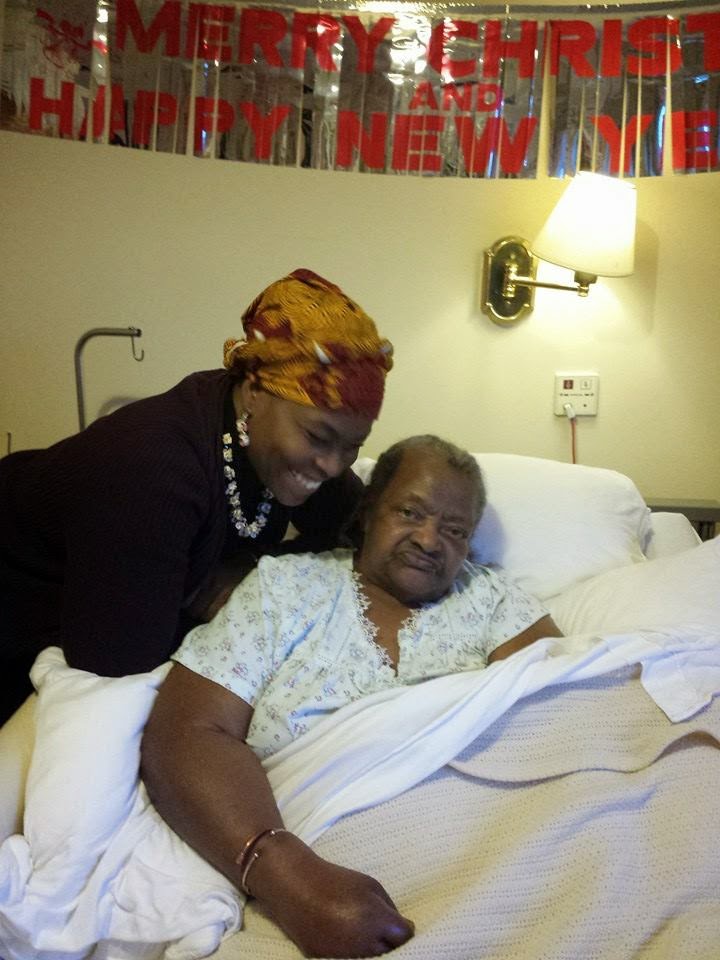
She didn’t take her health issues as seriously as she should have. I felt gutted each time I went into KFC or Speedy Noodle on her request which I always felt obliged to fulfil. She hid the severity of her health problems – major ones like diabetes. The oily food, sweets, biscuits, crisps - especially quavers, she craved gave her childlike pleasure but was so contrary to her good health. That last time I saw her I had a sense would be the last. Prior to this my goodbyes were met with a familiar “okeydoke.” I had whispered to her that she had had a great life - there's nothing really needed here for her to keep onto. I told her I loved her. Told her that she had travelled to more places than I could ever dream of seeing. But she would encourage me to dream big, aim high, and tell me well done when I mentioned an achievement. I told her she had worked hard, despite serious obstacles, persevered to own her own house. I asked her to look at the camera, and smile because it was her birthday. The eyes looked up, the old time beauty yet proud to face the camera, but she looked so sad signalling the bittersweet sorrow we would all share at her passing on Saturday 19th July.
Mrs Washington often spoke fondly of her grandchildren, I recall Jason particularly, whom she said would always bring something for her. She leaves behind her sister Waveney, brother Dennis, Desmond her son, other grandchildren, Paris, Craig, Samar, Jonathon, a niece, Joan, nephew John; many friends, she always said Sister Monica was her best friend, neighbours, church family and people in the Brixton community who knew her. You will be missed by us all, Mrs Washington - witnesses to your enchanting, exuberant life. Our thanks to the nursing home in Kent where she passed away – when I visited she looked well cleaned and cared for by the staff there.
She went splendidly with the thunder and rain - her spirit beginning to travel in the resounding claps a few nights earlier. With the daytime blazes of the hottest days and nighttime pounding of the rain gods, she made a striking entrance through the eternal gates; casting off stick and ailments to sit at the Master’s feet and rest. With delight she lifts up her heart, finally free, finally ready to let go and make the journey home to abide with her ancestors. We salute you Mrs Washington - thank you for claiming us as family, and me as one of your daughters. I looked for and saw your vital force in the rainbow on your nine night - signalling your majestic transition, that you too could manifest in the elements if there is anyone to bear witness. Stride aloft My dear Mrs Washington because for you this tiring trod through Babylon is at last over - mount Zion is now your new, eternal home.
The rainbow, splashed on Mrs Washington Nine night. There was only spitting, it was near night - but the vital sign was there.
Shout Out
She was struggling with a shopping trolley just near Brixton Station. An elder woman, on her own, doing her shopping. She looked weary but determined. I was handing out flyers. She reached for one and I became curious that she was on her own. Where are your people, I asked her. She said her son lived in Kent, I can’t recall what else she said. We got chatting, I picked up her Guyanese accent. She sounded a bit like my mum and my mum’s friend Ms Monica – an old time Guyanese - a kind of sing-songy poshness and vibrancy.
She stood with me for a while - said she would like a massage one day. Sure I said, thinking it won’t ever happen. She began telling me a little of her life - particularly her trials with men - distrusting all of them – and firing "effings" here and there - as she told her stories. I tried hiding my shock! She seemed to be enjoying herself knowing she was surprising me, commanding my deepest interest.
Nearly a year later, I received a call from her. Mrs Washington - Ivy, she said. I had the feeling I was expected to know who she was – as if she was a “some body” – the “Mrs” title was never removed though I realised later she had been divorced for several years. She wanted that massage after all! Wow – was my thought because she was pretty robust, high large buttocks like that maid in the Tom and Jerry cartoons - her legs where she wanted the massage were thick.
The massage didn't happen. A surge of relief! But we became "friends." I learnt that she lived alone. The massage might have been a rouse to get me there - she really needed company - because those unbelievable numbers of fridge magnets, ornaments and every kind of random collectibles –those old time plastic tropical fruits, she blended with real ones and tricked you by asking if you wanted one - could only satisfy her loneliness so much. Oh she had dancing animals, singing teddies, illuminating angels, images of white Jesuses, but a black one somewhere too - pictures of her myriad trips abroad, and nuff postcards to complement. Her home needed to be on one of those decluttering programmes. It spun my head! But how she loved these possessions that some of us encouraged her to part with if only to give herself space to breathe.
Perhaps it was in a bid to see her in a clear, more tranquil space that over year ago, some months before the fall I dreamt the house was completely decluttered – you could see the floors, no carpet just plain wooden floors, blank walls upstairs and down. Mrs Washington, I said in the dream – you’ve cleaned out the place, it looks lovely. There was light coming through the windows – the house looked calm, she looked at peace. I told her the dream and she said it was good.
The dream must have been a sign of her demise, her spirit preparing the way for a final journey. Her survival from the fall – having been found four days later by neighbours - reaffirmed the powerful, strong, woman she was. That she should face that kind of trauma and pull through, come back with the fighting triumphant spirit we adored her for was phenomenal. So amazing it fooled us into believing she was invincible.
She was always so lively, though crying out for the pains - yet acknowledging her mouth to be still strong. She pulled you into her laughter – sometimes with her own jokes other times by showing you one of her performing animals that delighted her so much. I became drawn into her world, loving her as though I’d known her all my life. It turned out that she knew my mother, Lucille, they shared a best friend in Mrs Monica Wisdom – sisters of Unity a self-empowering brand of Christianity.
Mrs Washington was truly fascinating. She was so proud – had a magnetic personality. Her brand of life affirming expressions I’m not sure we can truly appreciate. She was sometimes very suspicious of people; was intensely protective of those possessions, perhaps precious only to her – none of which she could ever take with her to her final resting place.
The last year had robbed her of life, that vitality she used to give political commentary – she often filled in the gaps in my awareness of current affairs. The stroke shocked us and eventually left her in a deathlike state looking with sad lonely eyes through the window - no longer communicating as she had been (then there was minor recognition and sometimes even speaking). Last time I saw her was a few months ago on her birthday in April. She looked so cute - but there was a sign of finality - the demise clearly imminent. I needed to know precisely how old she was – and attempted to write down a figure and see if she would confirm or deny it to be her right age. She just looked at the paper (somewhere in there I thought she was thinking – “wha’ really wrang wid dis geurl.”
Her only child, Desmond later told me she was born in 1929, making her 85. Like many of her generation who came from the West Indies and Guyana, Mrs Washington arrived in the UK full of expectations of a better life. I once asked if she’d ever returned to Guyana – “when yoh come out da gutter wha’ sense it mek going back,”she said seriously. I tried not to feel offended. She was a grafter, was always blessed to find work. I don’t think this was down to her skills alone – I imagine it was also because she was a stunning film star beauty who simply charmed anyone who met her. I loved those beautiful black and white photos she had of herself in the house – particularly the one in her wedding dress – her husband nowhere in sight – just a gorgeous young woman poised to take on a new life.
But it was the hard work and sense of enterprise, the spirit of the time she came here that made it possible to buy her home in Brixton. Oh this was her ultimate achievement – her life and soul went into that home. It was an absolute pride, a joy to know that after great struggle she could declare that it was bought by the sheer hard work and determination – along with remarkable thriftiness. I listened to the story over and over. One had to. And respect the achievement. Her next achievement for which she was proud was sending for her son to join her in England. But she was the kind of woman you couldn’t help adopting as your mother. She embraced people. She was an icon on Medwin Street, having lived there for decades and well known to everyone who might hear her mouth before they saw her slow strutting with her trolley.
She had an independent spirit. We can all attest to her stubbornness. And her strength she owed to her God, whose name she never stopped calling. A lot of prayers went with those colourful curses with which she introduced herself to me. Everyone knows of her generosity, the charitable attitude she had of always giving. There wasn’t a day I visited I left empty handed – no amount of courteous refusal was acceptable. She always tried to get me to take these incontinent pads – she had a stash of them – for my mum – or just to send back home! It’s ok, I’d say. But the offer was always there. And she got extra medical supplies (random tablets) she thought they could use back home in Guyana. Her crazy extended to odd things she bought from the £1 shop, often insisting I take them; would look almost insulted when I refused. So I'll keep the three kitsch cups because they'll remind me how happy she looked when I accepted these strange but generous "gifts."
I loved her craziness - marvelling at her all the time. For different reasons - like why she held on so tightly to things – physically and mentally. Wondered when she would ever let them go – be resigned to quietude that comes with releasing. Or the way she had reached that elder's state of repeating stories as though telling you for the first, maybe second time. Or the fact that she had overcome burdens that would defeat many others, bring them down. But her laughter was always so vibrant – attesting to her spirited embrace of all the changing scenes of life.
She didn’t take her health issues as seriously as she should have. I felt gutted each time I went into KFC or Speedy Noodle on her request which I always felt obliged to fulfil. She hid the severity of her health problems – major ones like diabetes. The oily food, sweets, biscuits, crisps - especially quavers, she craved gave her childlike pleasure but was so contrary to her good health. That last time I saw her I had a sense would be the last. Prior to this my goodbyes were met with a familiar “okeydoke.” I had whispered to her that she had had a great life - there's nothing really needed here for her to keep onto. I told her I loved her. Told her that she had travelled to more places than I could ever dream of seeing. But she would encourage me to dream big, aim high, and tell me well done when I mentioned an achievement. I told her she had worked hard, despite serious obstacles, persevered to own her own house. I asked her to look at the camera, and smile because it was her birthday. The eyes looked up, the old time beauty yet proud to face the camera, but she looked so sad signalling the bittersweet sorrow we would all share at her passing on Saturday 19th July.
Mrs Washington often spoke fondly of her grandchildren, I recall Jason particularly, whom she said would always bring something for her. She leaves behind her sister Waveney, brother Dennis, Desmond her son, other grandchildren, Paris, Craig, Samar, Jonathon, a niece, Joan, nephew John; many friends, she always said Sister Monica was her best friend, neighbours, church family and people in the Brixton community who knew her. You will be missed by us all, Mrs Washington - witnesses to your enchanting, exuberant life. Our thanks to the nursing home in Kent where she passed away – when I visited she looked well cleaned and cared for by the staff there.
She went splendidly with the thunder and rain - her spirit beginning to travel in the resounding claps a few nights earlier. With the daytime blazes of the hottest days and nighttime pounding of the rain gods, she made a striking entrance through the eternal gates; casting off stick and ailments to sit at the Master’s feet and rest. With delight she lifts up her heart, finally free, finally ready to let go and make the journey home to abide with her ancestors. We salute you Mrs Washington - thank you for claiming us as family, and me as one of your daughters. I looked for and saw your vital force in the rainbow on your nine night - signalling your majestic transition, that you too could manifest in the elements if there is anyone to bear witness. Stride aloft My dear Mrs Washington because for you this tiring trod through Babylon is at last over - mount Zion is now your new, eternal home.
The rainbow, splashed on Mrs Washington Nine night. There was only spitting, it was near night - but the vital sign was there.
Shout Out
Wednesday, 2 July 2014
Searching for and Finding our Heroes
A capacity audience filled the V&A Lecture theatre on Sunday 8th June 2014. We were invited to “Search For the Hero” and were treated to a magical afternoon of cultural performances, tributes and celebration as the Huntley Biography Project was launched and the story of our heroes came alive.
TELEPHONE CONVERSATION
Whilst others lapped up the gorgeous sunshine in the grounds outside, something enchanting was being experienced inside the museum. We were taken on a journey back to the future, reliving the experiences of African and Caribbean migrants, recalling their hopes and dreams, appreciating their hard work and contributions to a society where they were often unwelcomed. The aspirations for a better life were neatly folded into a single “grip” – a hardy suitcase with which many African Caribbean people travelled to the “motherland,” as it was then regarded. Actress Nataylia Roni’s sketch of this shared experience perfectly captured the sour-sweetness of that first arrival in the 1950s and 1960s.
THE GRIP
This was extended by Imhotep Oyortey’s depiction of the curious scrutiny by white Britons who found it difficult adapting to the complexion and wave of their new Black neighbours. He gave a humorous and charismatic performance of Wole Soyinka’s incisive poem – “The Telephone Conversation”.
MAMA AFRICA
The duo later reunited on stage to take us on a deeper journey, back to the history and memory of African Caribbean people. As well as the experience of migration, there was the shared history of enslavement and colonisation; the reason that led to them travelling in search of opportunities outside their respective homes. Their psychological survival depended on remembering the ancestral wisdoms of Mother Africa. In a poignant and compelling performance of Mervyn Weir’s script, Nataylia and Imhotep urged us to keep alive the memory of Mother Africa by working together, having respect for each other and building our communities. Mervyn in fact, wrote this as a tribute to Jessica, capturing her wisdom and passion to pass on our rich legacy to the youth.
Nataylia Roni's grip sketch
Imhotep Oyortey
Nataylia as Mama Africa/Jessica Huntley
ORDINARY PEOPLE
Although the Huntleys came as ordinary people who would face inequality and obstacles relating to cultural differences, these ordinary people would go on to do extraordinary things. We were reminded by hosts and organisers of the event, Marge Lowhar and Mervyn Weir that the Huntleys were ‘humble, prepared to stay in the background’ heroes. They dedicated their lives to the struggle for justice, equality and self-determination for African Caribbean people in the UK and abroad.
‘AH SOH DEM SEH’
One of the heroic achievements of the Huntleys was co-founding Bogle L’Ouverture Publications, which was among few Black owned publishers during the 1960s and 70s. The event opened with Valerie Bloom’s reading of one of her poems – “ah soh dem seh” – providing a lyrical sample of Jamaican dialect and social commentary. Her collection of poems Touch Mi, Tell Mi was published by Bogle L’Ouverture precisely because it brings to life the culture and sound of Jamaica, reminding migrants of home and affirming their identity.
DOING NOTHING IS NOT AN OPTION
Though humble, the Huntleys were formidable, both Eric and Jessica having strong views about the ways things might be done. Their different approaches but agreement that something should be done was outlined by Margaret Andrews, author of their biography Doing Nothing is not an Option: the radical lives of Eric and Jessica Huntley. In the introduction she writes that the Huntleys are “symbols of courage, dignity and self-sacrifice,” whose “modesty makes it difficult for them to accept deserved praise for their contributions to Black communities in the UK and other parts of the world.”
NEW HEROES
There was the inevitable promise of continuity when we heard the radical rendition that “doing nothing is not an option – it doesn’t matter if it cause an eruption” from Eric and Jessica’s great grandchildren, Zachary and Tafari Osei. This journey now into the future was revealing new heroes for “injustice must be defeated but it won’t be by those we elected,” as their chanting went on.
Valerie Bloom performing ah so dem seh (Photo: Eddie Ossei)
Margaret Andrews discusses her biography, Doing Nothing is not an Option with Marge Lowhar
Chauncey, Kai, Zachary and Tafari, next generation Huntleys performing "Doing Nothing is not an Option"
THE ROSA PARKS OF THE UK
Other young people who made up a fair proportion of audience and performers expressed that they were inspired and motivated by the work of the Huntleys. Spoken Word artist Onysha Collins – who performed one of her poems said “I was inspired to learn that there were contemporary activists in Britain that I hadn’t known about when I was younger. So it is an honour to be part of the event.” Her poem was a tribute to Harriet Tubman who liberated many enslaved Africans during the American Civil War. She was one of many African heroes absent from Onysha’s year 8 history class – where she didn’t learn about “Africans seeking life” and “holding on to generational pride.” For fellow spoken word artist Imhotep Oyortey the Huntleys “are the Rosa Parks of the UK, frontline activists, contributing to art, culture and history.”
IF THEY CAN DO IT, I CAN DO IT
Rio, a young member of the audience said he was pleased to learn about the different cultural things the Huntley brought to the UK. He found the poetry educational and would be happy to tell his friends about the event. Teenager Infinity, who has written and published her own collection of poems, said she enjoyed learning about the lives of the Huntleys and how many people they affected. “A lot of people need encouraging,” she said. “And if they can do it, I can do it.”
WEBSITE LAUNCHED
The launch of the website aims to provide easy access to learning materials about the contributions the Huntleys have made to the cultural, social and political landscape in the UK. Eric Huntley was called to the stage to press the online button, symbolic of the ribbon cutting ritual that gave us the first view of the live website. This historic moment was particularly special because it extends the Huntleys’ journey from humble but impressive beginnings in publishing into the age of modern technology.
This online resource will give greater presence to their work and that of the communities they support. The organisers of the event shared their aspiration that schools, educators, young and adult learners would make use of the resource. Leah Gordon, a secondary school teacher said about the event: “the launch gave a really good overview of the Huntleys’ contribution to our community. The cultural performances were fantastic! They were truly heartfelt and appealed to all ages. The website looks great. I will be working the free educational resources into the Black History Month programme at my school.”
Eric Huntley presses button to launch Huntleysonline website
JESSICA REMEMBERED
For some time there was an empty stool, just to the left of the stage. If not intentionally, it wouldn’t take much for the audience to imagine why it was there. Jessica Huntley knew of the project but did not live to see its fulfilment. Part of the enchantment of the afternoon was that one could picture her sitting on that stool left of centre stage. Flautist Keith Waite’s musical tribute to Jessica was added to the wonderful, dreaminess of the afternoon; beautifully evoking not only her spirit but the vivid, rainforest sounds of the Huntleys’ birthplace Guyana.
Our spirits were further uplifted by the powerful musical performances of gospel singer and jazz vocalist Celia Wickham-Anderson. Her slow, deliberate interpretation of Mariah Carey’s “Hero” appropriately set the mood for the afternoon. There were many heroes among us. The Huntley Biography project could not have been possible without the heroes of the organisation Krik Krak who decided that it needed to be done; who put their ideas to action and applied to the Lottery Heritage Fund through which it was then made viable. It showed what can be accomplished with conviction, self-belief and love; when like the heroic lives we were there to honour it was recognised that “doing nothing is not an option.”
Onysha Collins reciting poem
"I will make use of the online resources for Black History Month at my school", Leah Gordon
"If they can do it I can do it!" - says Infinity.
Marge Lowhar, Krik Krak
Mervyn Weir of Krik Krak, organisers of the project and launch.
GONE BUT NOT FORGOTTEN
Celia reinterpreted Marvin Gaye’s song “Abraham, Martin, John” to honour Black female contributors to liberation, independence and creativity. Against their images beaming from the screen she sang these words, moving many to tears: “has anybody here seen my old friend Harriet … can you tell me where she’s gone…Has anybody here seen my old friend Claudia, you know she always fought for equality, transforming our society, I looked around and she was gone…Has anybody here seen my sister Maya, she gave us words and still I rise, I looked around and she was gone…Has anybody here seen our good friend Jessica, can you tell me where she’s gone … mother, friend, sister and wife, building community was her life, I just looked around and she was gone…”
Gone but they left behind powerful legacies from which we can continue to build.
Finally in closing, everyone rose to their feet to mark our appreciation for the radical lives of Jessica and Eric Huntley. Drum beats played us out, “if I had wings like a dove, I would fly, fly away…” livelying up the otherwise quiet Sunday at the museum. But the love and energy was so magnetic we didn’t want to leave, not even to embrace that other kind of sunshine outside. We came in search of heroes, we found them, but more than that, we left inspired and challenged to be the heroes for the next generation.
gospel singer and jazz vocalist Celia Wickham-Anderson
Keith Waite pays tribute to Jessica Huntley.
Shout Out
This Shout is also printed at www.Huntleysonline.com blog.
Most of the photos used were taken by Eddie Osei, I use them with courtesy.
Subscribe to:
Posts (Atom)


.jpg)

.jpg)


.jpg)


.jpg)